
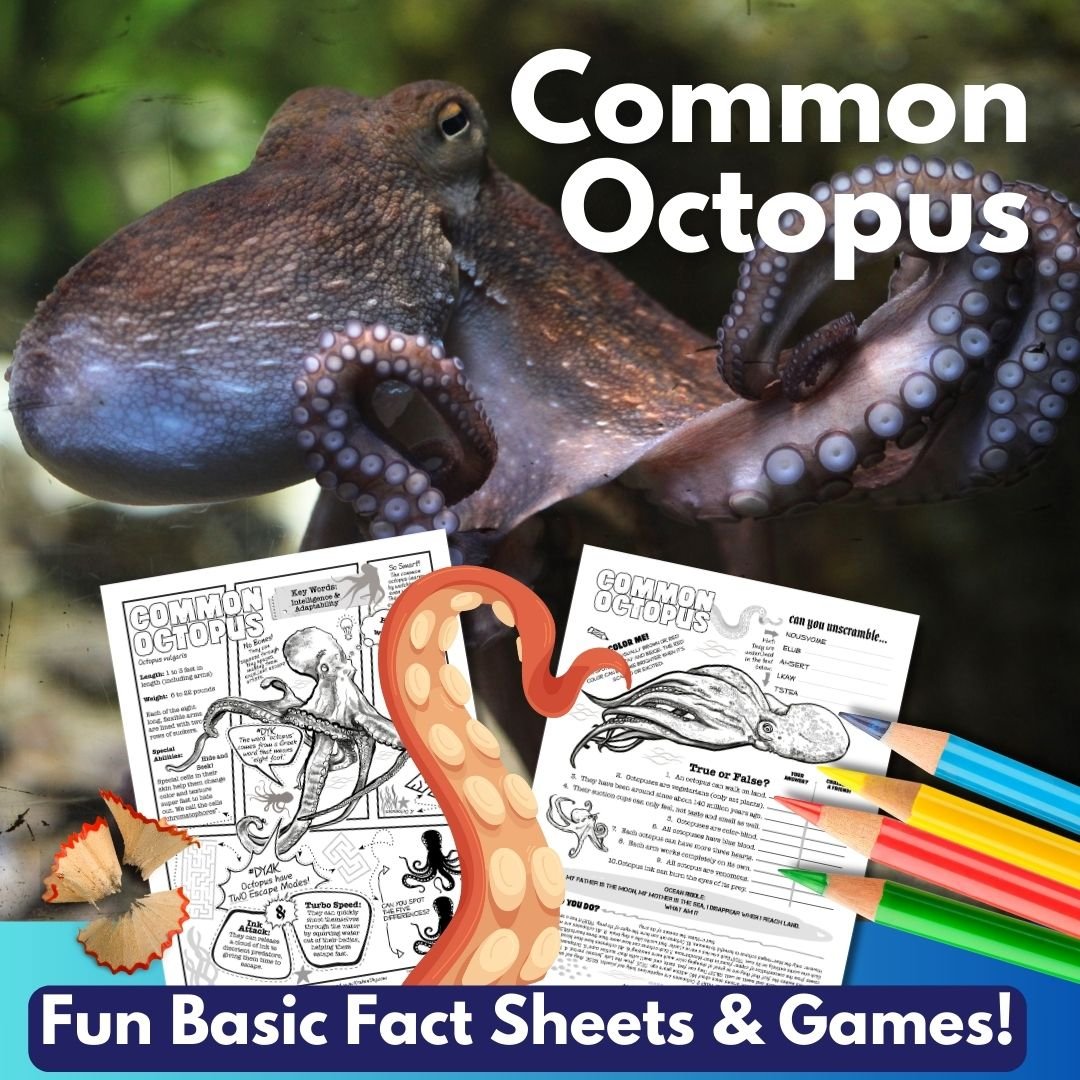
Common Octopus - Fun Fact & Activity Sheets
Common Octopus - Fun Fact & Activity Sheets
2 pages, black and white for easy printing, great for aquariums, camps, and science classes!
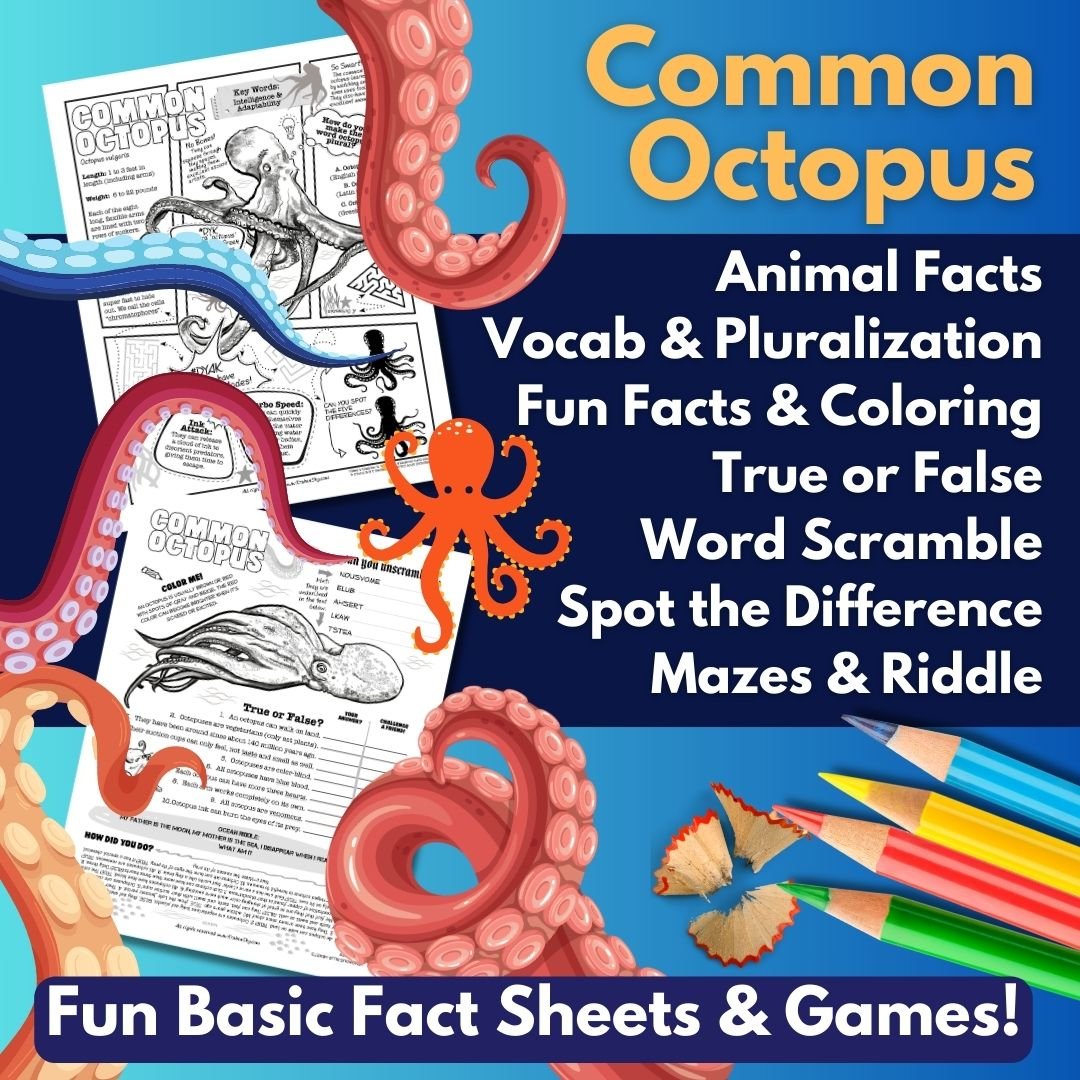
Animal Facts - Scientific name, weight, abilities...
Vocab & Pluralization - What is the pluralization of Octopus, and where did that word come from?
Fun Facts & Coloring - Escape modes, bones, hearts, etc!
True or False - Octo info facts true or false game with answers!
Word Scramble - A fun word scramble has the participant scan the text for clues.
Spot the Difference - Fun for all ages!
Mazes & Riddle - Something extra to stay occupied for fast finishers :)
Key Classroom Features:
- Detailed Information: Learn about the octopus's physical traits, such as arm structure, weight, and special abilities like camouflage and escape techniques.
- Fun Facts: Discover intriguing facts, including their intelligence, adaptability, and unique behaviors like tool use and color-changing abilities.
- Interactive Elements: Challenge students with true or false questions about octopuses, a “spot the difference” activity, and a riddle to stimulate critical thinking.
- Coloring Section: Encourage creativity with a coloring section where students can express their artistic side while learning about the octopus’s appearance.
- Word Unscramble: Reinforce vocabulary with a fun unscrambling activity related to the octopus and its characteristics.
Educational Standards Alignment:
Common Core State Standards (CCSS):
Reading Informational Text: Analyze key ideas and details about the octopus's habitat, behavior, and biology.
Writing: Students can write informative texts about marine life based on their learning.
Next Generation Science Standards (NGSS):
MS-LS1-3: Use argument supported by evidence for how the structure of organisms (like the octopus's arms and suckers) enables them to survive in their environment.
MS-LS2-4: Analyze and interpret data to determine how the octopus interacts with its ecosystem, including its role as a predator.
Ideal For:
Classroom discussions on marine biology.
Science projects and presentations.
Homeschooling and enrichment activities.