
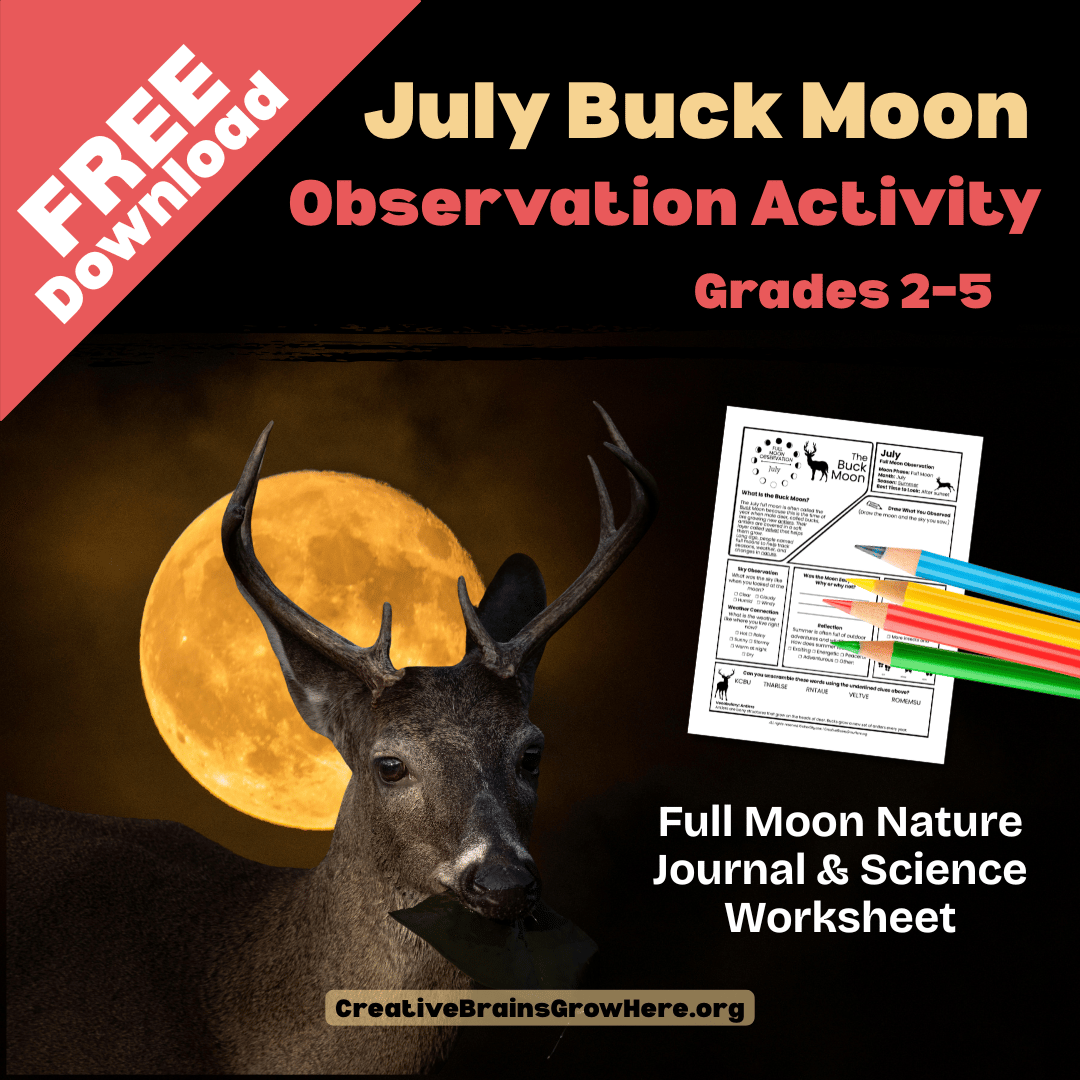
July Buck Moon Observation Activity | Full Moon Nature Journal & Science Worksheet
July Buck Moon Observation Activity | Full Moon Nature Journal & Science Worksheet
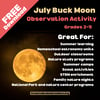
Looking for a fun way to connect kids with nature, science, and seasonal learning? This July Buck Moon Observation Activity helps students explore the night sky while learning about one of summer's most famous full moons.
Named for the time of year when male deer (bucks) grow new antlers, the Buck Moon provides a perfect opportunity to combine astronomy, wildlife studies, observation skills, and nature journaling in one engaging printable activity.
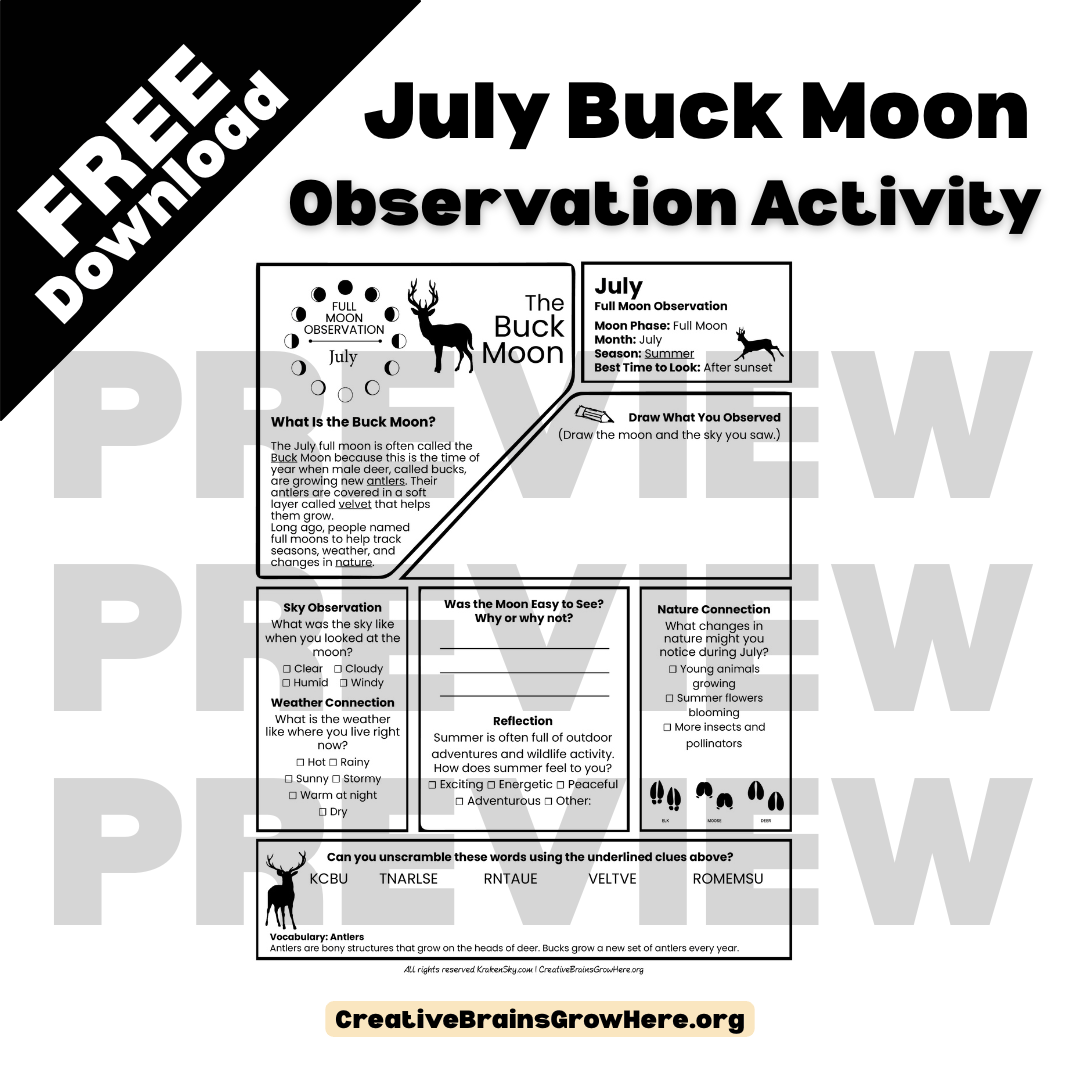
Students will observe the moon, record weather conditions, reflect on seasonal changes, explore summer wildlife connections, and build vocabulary through a simple word scramble activity.
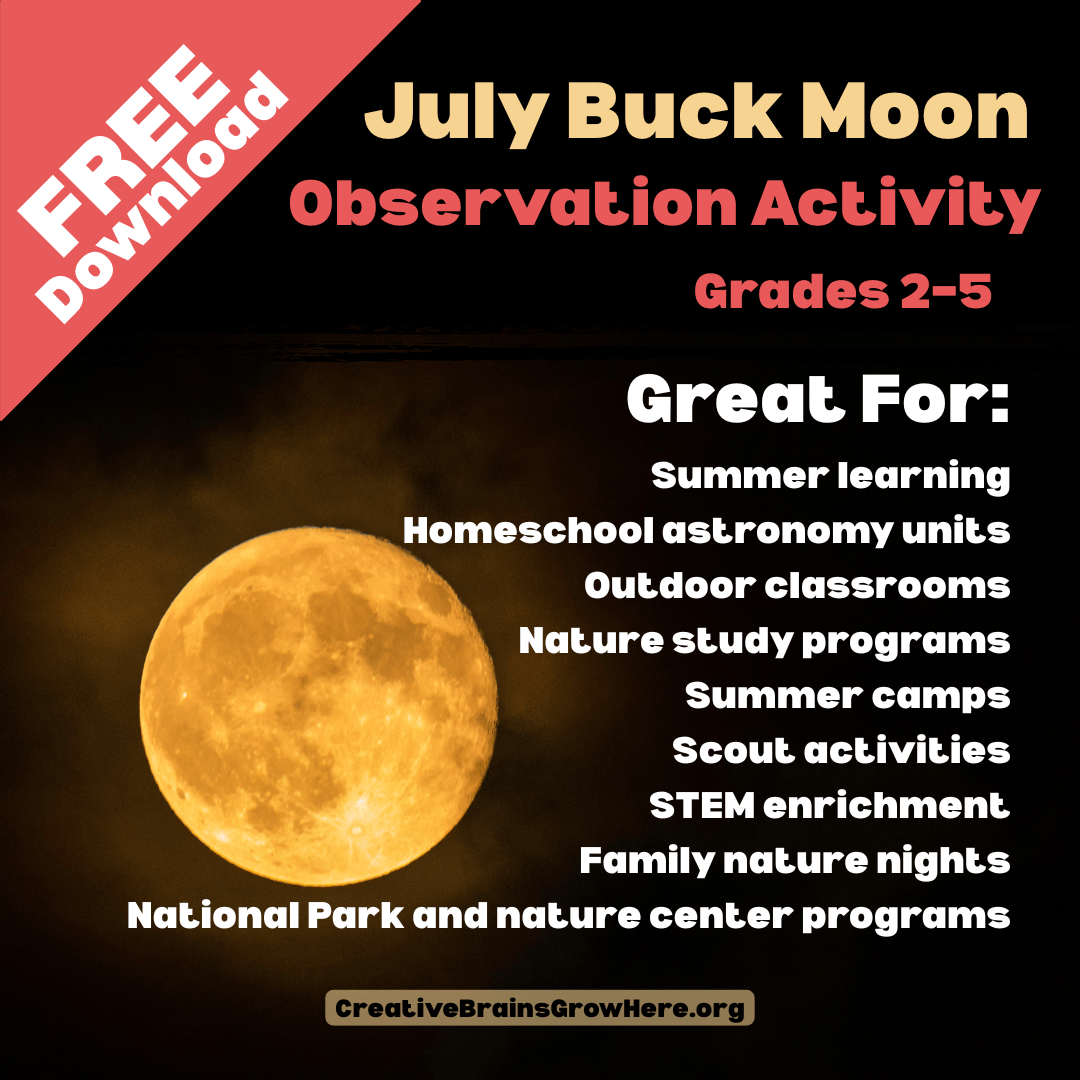
Perfect for classrooms, homeschool lessons, nature centers, summer camps, scout groups, outdoor education programs, and family learning activities.
What's Included
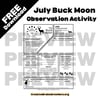
✔ 1-page July Buck Moon observation worksheet
✔ Buck Moon facts for kids
✔ Moon observation drawing space
✔ Weather and sky observation prompts
✔ Summer nature connection activity
✔ Reflection questions
✔ Vocabulary focus: Antlers
✔ Summer-themed word scramble
✔ Black-and-white, printer-friendly format
Skills Covered
- Scientific observation
- Nature journaling
- Seasonal awareness
- Astronomy basics
- Wildlife connections
- Vocabulary development
- Critical thinking
- Recording data and observations
Great For
- Summer learning
- Homeschool astronomy units
- Outdoor classrooms
- Nature study programs
- Summer camps
- Scout activities
- STEM enrichment
- Family nature nights
- National Park and nature center programs
Topics Included
- Buck Moon
- Full Moon Observation
- Deer and Antler Growth
- Summer Wildlife
- Seasonal Changes
- Nature Connections
- Weather Observation
- Moon Phases
Grades
Best suited for Grades 2–5, but can easily be adapted for younger learners with support or older students as part of a nature journal unit.
Why Teachers and Parents Love It
This activity encourages kids to step outside, slow down, and observe the natural world around them. It combines science, writing, and nature study in a simple format that requires little preparation while supporting observation and inquiry skills.
Frequently Asked Questions About the July Buck Moon
What is the Buck Moon?
The Buck Moon is the traditional name for the full moon that occurs in July. It gets its name from male deer, called bucks, which are growing new antlers during this time of year.
Why is it called the Buck Moon?
July is when bucks are actively growing their antlers. Their antlers are covered in a soft layer called velvet that helps provide nutrients as they grow.
When can you see the Buck Moon?
The Buck Moon is best viewed after sunset when the full moon rises above the horizon. It often appears large and bright during warm summer evenings.
Is the Buck Moon different from other full moons?
The moon itself is not different. The name "Buck Moon" is a traditional nickname used to mark seasonal changes in nature.
What are antlers?
Antlers are bony structures that grow on the heads of deer. Bucks shed and regrow their antlers every year.
What is velvet on a deer's antlers?
Velvet is a soft, fuzzy covering filled with blood vessels that helps antlers grow. Once the antlers are fully grown, the velvet dries up and falls off.
What can kids observe during the Buck Moon?
Kids can observe:
- The shape and brightness of the moon
- Cloud cover and weather conditions
- Nocturnal animals
- Summer plants and flowers
- Insects and pollinators are active during the summer
What wildlife is active during the Buck Moon season?
Depending on where you live, you may notice deer, bats, owls, fireflies, frogs, pollinators, and many young animals growing during the summer months.
Is the Buck Moon a good time for nature journaling?
Yes! The Buck Moon is a great opportunity for children to practice scientific observation, record weather conditions, sketch what they see, and make connections between astronomy and seasonal changes in nature.
What skills does a Buck Moon observation activity teach?
Buck Moon activities help develop:
- Observation skills
- Critical thinking
- Scientific inquiry
- Vocabulary development
- Nature awareness
- Writing and reflection skills
- Seasonal and astronomy knowledge
Can this activity be used for homeschool, summer camp, or classroom learning?
Absolutely! The Buck Moon Observation Activity works well for homeschool science lessons, summer camp nature programs, outdoor education, scout groups, astronomy units, and classroom enrichment activities.
What grade levels is this activity best for?
This resource is ideal for Grades 2–5 but can be adapted for younger learners with support or used independently by older elementary students.
❤️This resource has been donated to educators by CreativeBrainsGrowHere.org
Follow on social media @CreativeBrainsGrowHere ❤️ Donate Here
I’d Love to Hear From You!
If you use this activity, I’d love to know how it goes in your classroom or at home! Feel free to tag me on social media @creativebrainsgrowhere — I love seeing how learners explore science through hands-on creativity!
As an educator, author, and illustrator, your reviews and feedback help me continue creating meaningful, kid-friendly resources that support curious minds.
Thank you, and have a fantastic week!
— Julianne (J)