
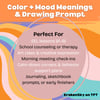
Color + Mood Meanings Chart & Drawing Prompt | SEL + Art Integration Printable
Color + Mood Meanings Chart & Drawing Prompt | SEL + Art Integration Printable
Help students build emotional awareness and creative expression with this easy, print-and-go Color + Mood Meanings chart! This kid-friendly reference page teaches how different colors can represent feelings—perfect for social-emotional learning, morning meetings, art class, counseling sessions, or creative journaling.
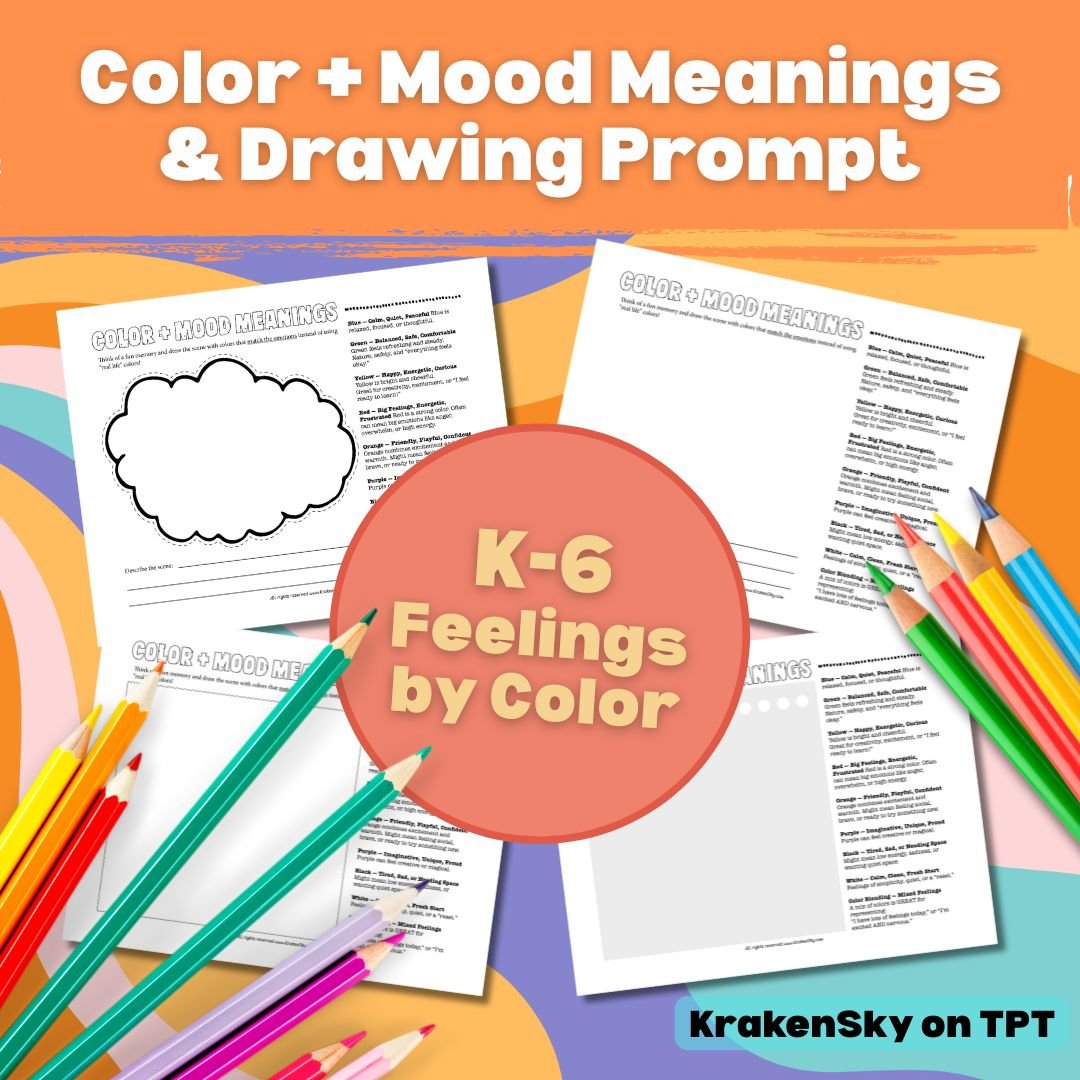
Students explore how colors like blue (calm), green (safe), yellow (happy), red (big feelings), orange (playful), purple (imaginative), black (tired or needing space), and white (fresh start) can be used to represent emotions in their artwork or daily reflections. They’ll also learn how color blending can represent mixed feelings—a developmentally powerful SEL concept.
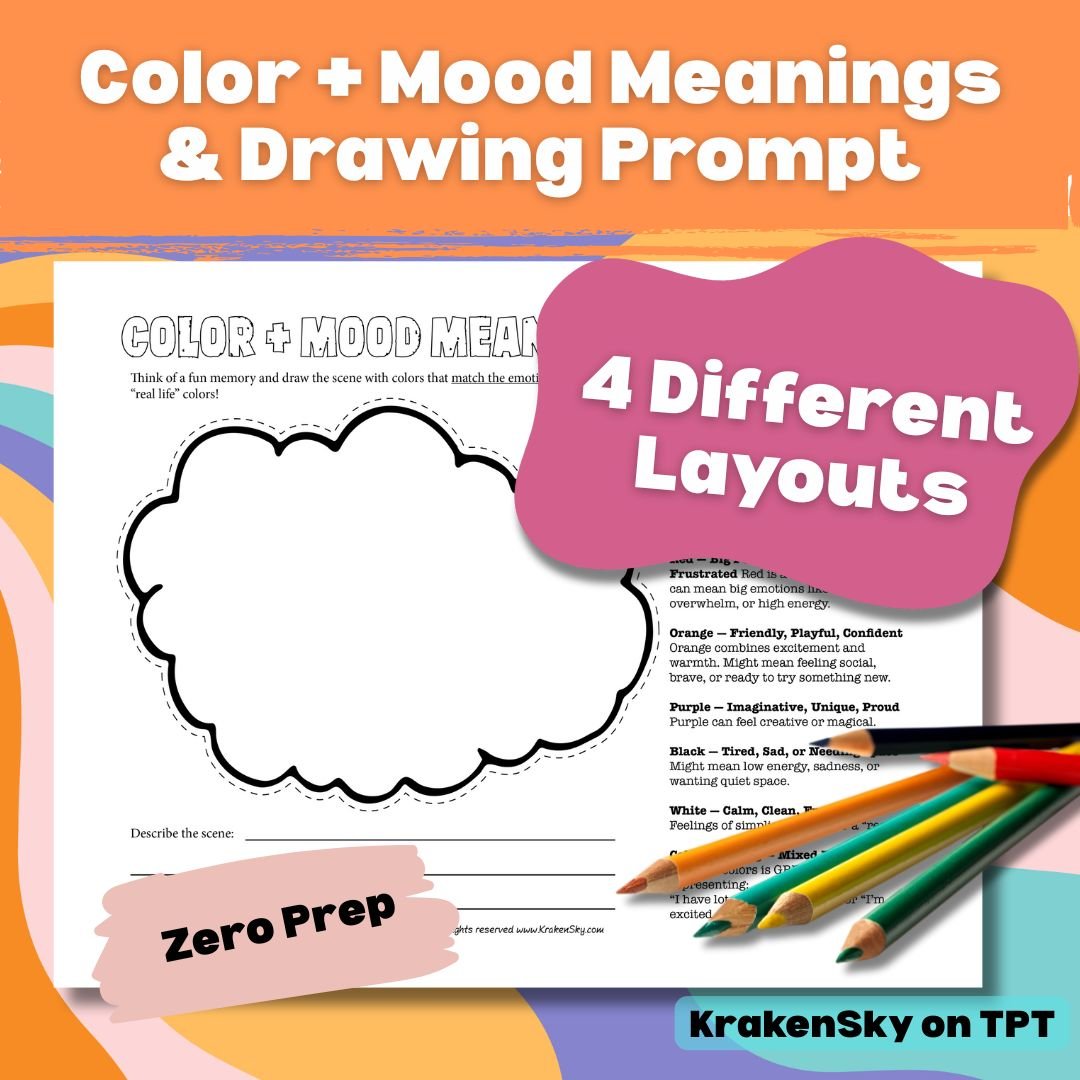
This resource also includes a creative drawing prompt where students illustrate a memory using emotion-based colors instead of “real-life” colors, helping them practice reflection, storytelling, and emotional vocabulary in a low-pressure, artistic way.
What’s Included
- Each page: Color + Mood Meanings chart (kid-friendly)
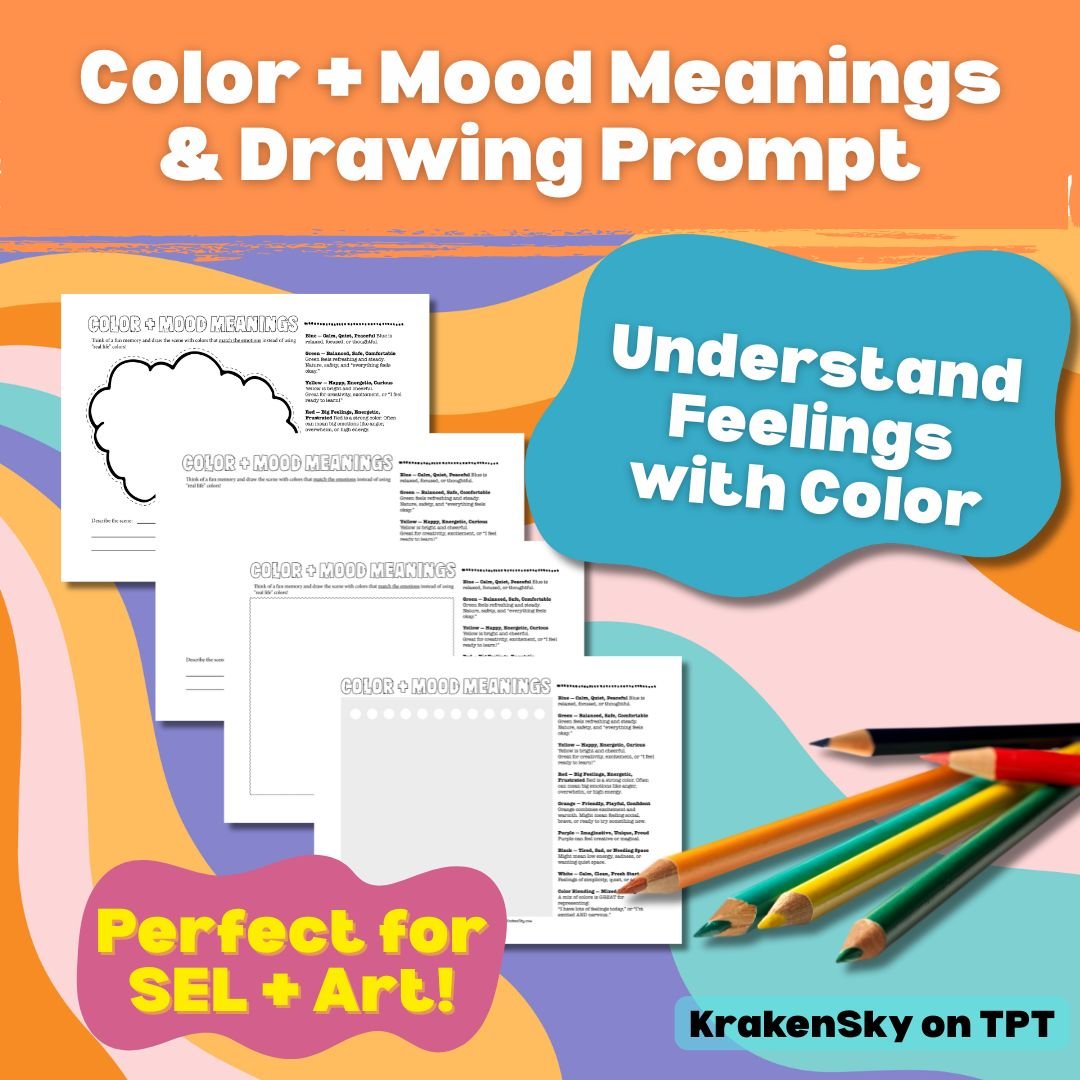
- Several style options for drawing/reflective prompts
- Clear, simple definitions aligned with SEL goals
- Black-and-white + color-friendly design
Perfect For
- SEL lessons (K–6)
- School counseling or therapy
- Art class & creative expression
- Morning meeting check-ins
- Calm-down corners & behavior support plans
- Journaling, sketchbook prompts, or early finishers
Skills Supported
- Emotional literacy & self-awareness
- Art + SEL integration
- Reflection and expressive communication
- Understanding mixed emotions
- Creative thinking & storytelling
Common Core State Standards (ELA) AlignmentCCSS.ELA-LITERACY.RI.K–3.1
Ask and answer questions about key details in a text.
- Students explain why certain colors match certain emotions using the chart as a reference.
- Teachers can prompt: “Which color shows calm? How do you know?”
CCSS.ELA-LITERACY.RI.K–3.7
Use information gained from illustrations and words to demonstrate understanding.
- Students use the color chart to interpret the meaning and apply it in their drawing.
- The handout directly merges visual information + text, which strengthens comprehension.
CCSS.ELA-LITERACY.SL.K–3.4
Describe familiar people, places, things, and events with relevant details, expressing ideas clearly.
- Students complete the drawing prompt and describe the scene using emotion-based colors (e.g., “I used yellow because I felt excited”).
CCSS.ELA-LITERACY.W.K–3.3
Write narratives describing real or imagined events using details.
- The optional “Describe the scene” section allows students to narrate a memory and explain emotional choices.
CCSS.ELA-LITERACY.W.K–3.8
Recall information from experiences or gather information from provided sources to answer a question.
- Students reflect on a memory and use the chart to select appropriate symbolic colors.
Why This Resource Aligns Well with CCSS
This handout requires students to:
- Interpret a text-supported visual chart,
- Make meaning from symbolic representations (color → mood),
- Explain the reasoning behind creative choices,
- Describe personal experiences using clear details,
…it fits naturally under Reading Informational Text, Speaking & Listening, and Writing standards for early elementary.