
What Is Pollination - Facts + Waggle Dance + Games
On Sale
$0.99
$0.99
What Is Pollination - Facts + Waggle Dance + Games
“What is Pollination?” – Bees & Pollinators Activity Page with Word Search and Waggle Dance Diagram
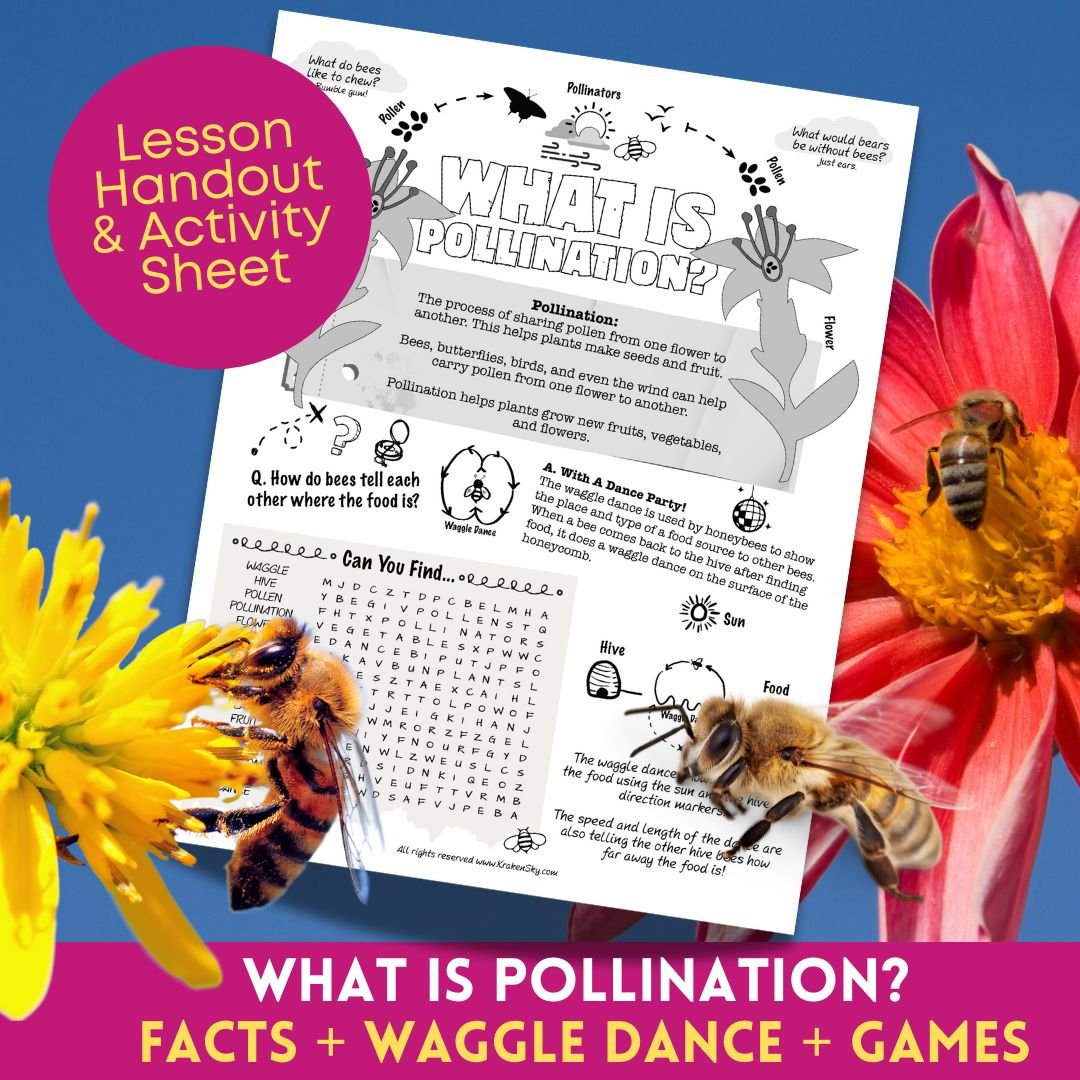
Introduce your students to the amazing world of pollination with this engaging, printable activity page!
Students will learn:
- What pollination is and why it matters for plants and food production
- Which animals are pollinators (bees, butterflies, birds, and even the wind!)
- How honeybees communicate food locations through the “waggle dance.”
- Key vocabulary such as pollen, hive, flowers, honeycomb, and more
Includes:
- Illustrated Explanation of Pollination
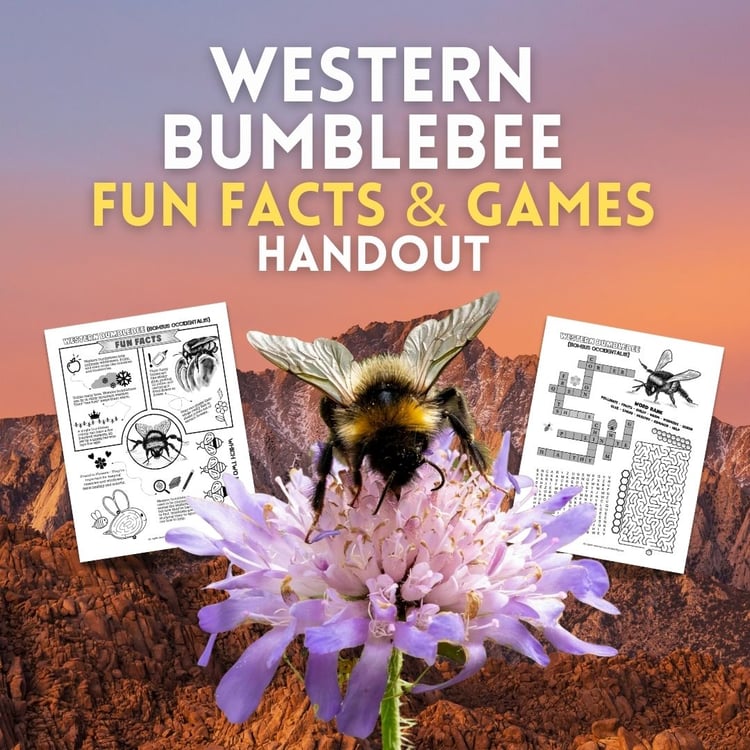
- Fun Bee Facts (“What do bees like to chew?” etc.)
- Diagram of the Waggle Dance showing direction & distance
- Word Search Puzzle, reinforcing pollination vocabulary
Curriculum Alignment:
NGSS (Next Generation Science Standards):
- K-LS1-1: Use observations to describe patterns of what plants and animals (including humans) need to survive.
- 1-LS1-1: Use materials to design a solution to a human problem by mimicking how plants and/or animals use their external parts.
- 2-LS2-2: Develop a simple model that mimics the function of an animal in dispersing seeds or pollinating plants.
- 3-LS2-1: Construct an argument that some animals form groups that help members survive.
- 3-LS4-3: Construct an argument with evidence that in a particular habitat some organisms can survive well, some survive less well, and some cannot survive at all.
CCSS (Common Core State Standards – English Language Arts):
- CCSS.ELA-LITERACY.RI.1.2: Identify the main topic and retell key details of a text.
- CCSS.ELA-LITERACY.RI.2.4: Determine the meaning of words and phrases in a text relevant to a grade 2 topic.
- CCSS.ELA-LITERACY.RI.3.7: Use information gained from illustrations and the words in a text to demonstrate understanding of a process.
- CCSS.ELA-LITERACY.L.1.4 / L.2.4: Determine or clarify the meaning of unknown and multiple-meaning words and phrases.
Skills Practiced:
✅ Reading informational text
✅ Vocabulary building
✅ Understanding life science concepts
✅ Interpreting diagrams
Perfect for science centers, sub plans, early finishers, or a spring-themed science lesson.