
Florida Poisonous Plants Trail Guide | Nature Safety | Science | Camps
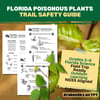
Florida Poisonous Plants Trail Guide | Nature Safety | Science | Field Trip Resource
One wrong plant can turn a great field trip into a problem. Teach Florida plant safety the easy, kid-friendly way with this Poisonous Plants Trail Guide.
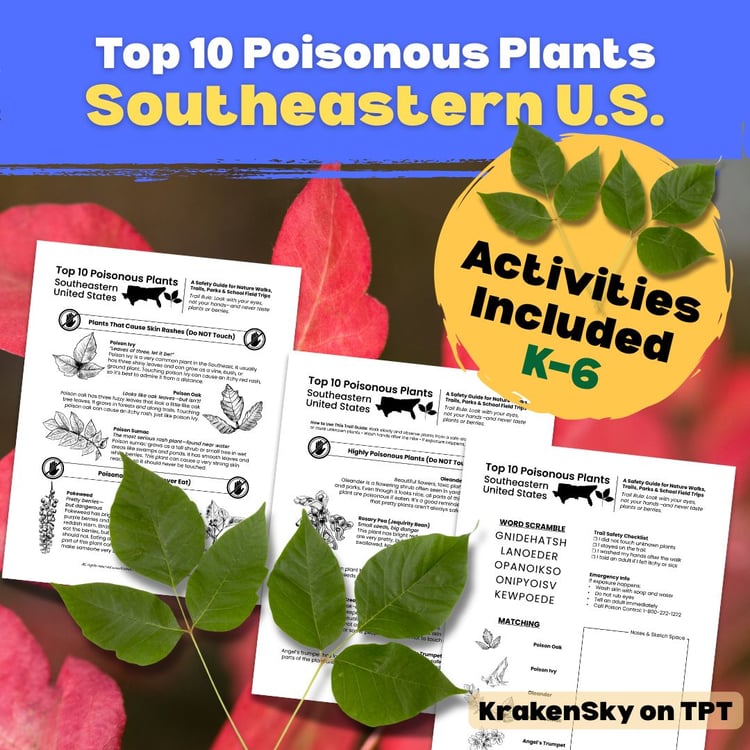
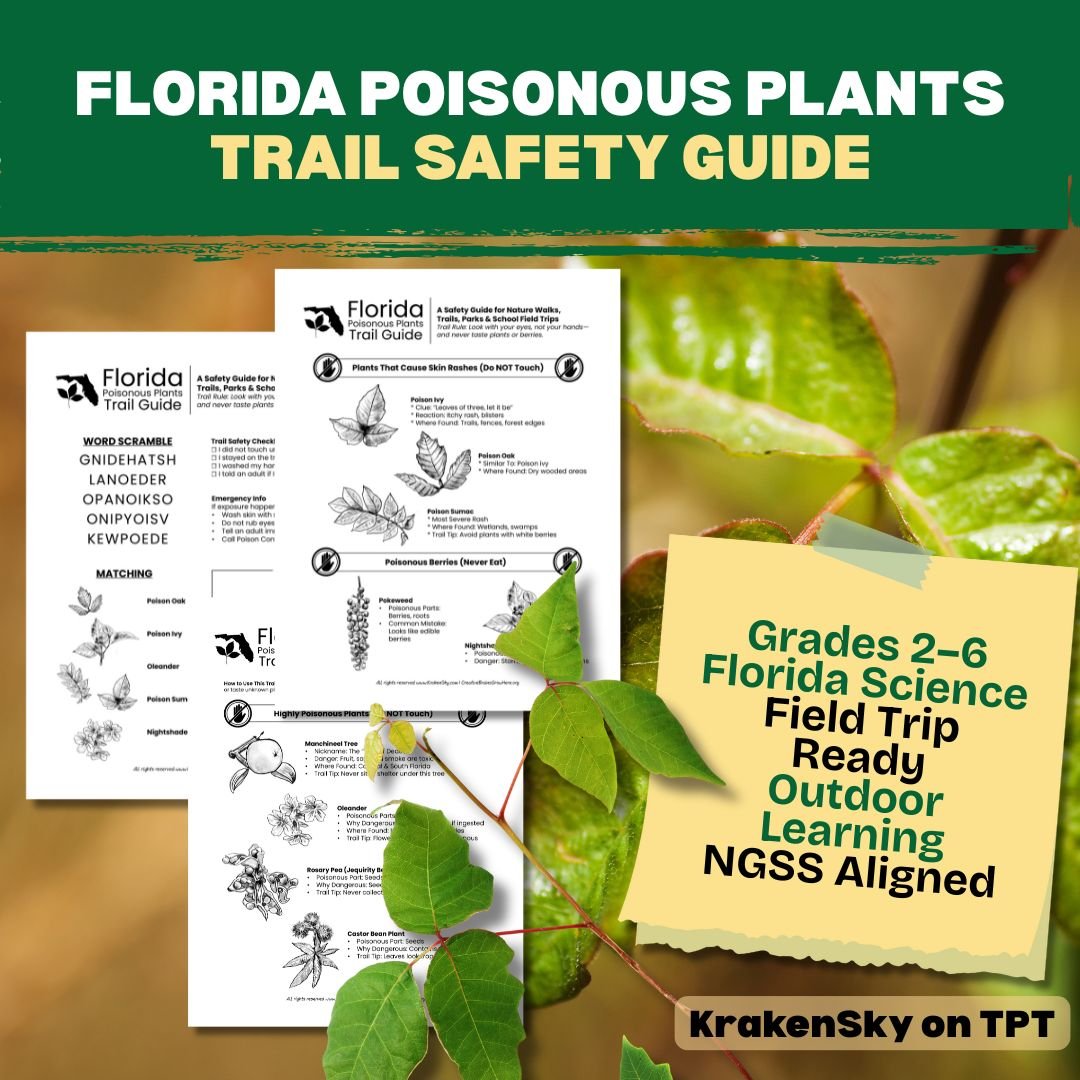
Teach students how to explore Florida trails safely! This Florida Poisonous Plants Trail Guide helps grades 2–6 identify dangerous plants, follow trail safety rules, and build real-world science skills—perfect for field trips, nature walks, and outdoor classrooms.
Help students explore Florida’s natural environments safely and responsibly with this engaging, kid-friendly Florida Poisonous Plants Trail Guide. Designed for nature walks, school field trips, outdoor classrooms, and environmental education programs, this resource teaches students how to identify dangerous plants, follow trail safety rules, and practice real-world environmental awareness.
Students learn to recognize highly poisonous plants, rash-causing plants, and toxic berries commonly found in Florida while reinforcing science vocabulary, observation skills, and personal safety habits
No-prep, kid-friendly, and designed for real outdoor learning experiences.
What’s Included
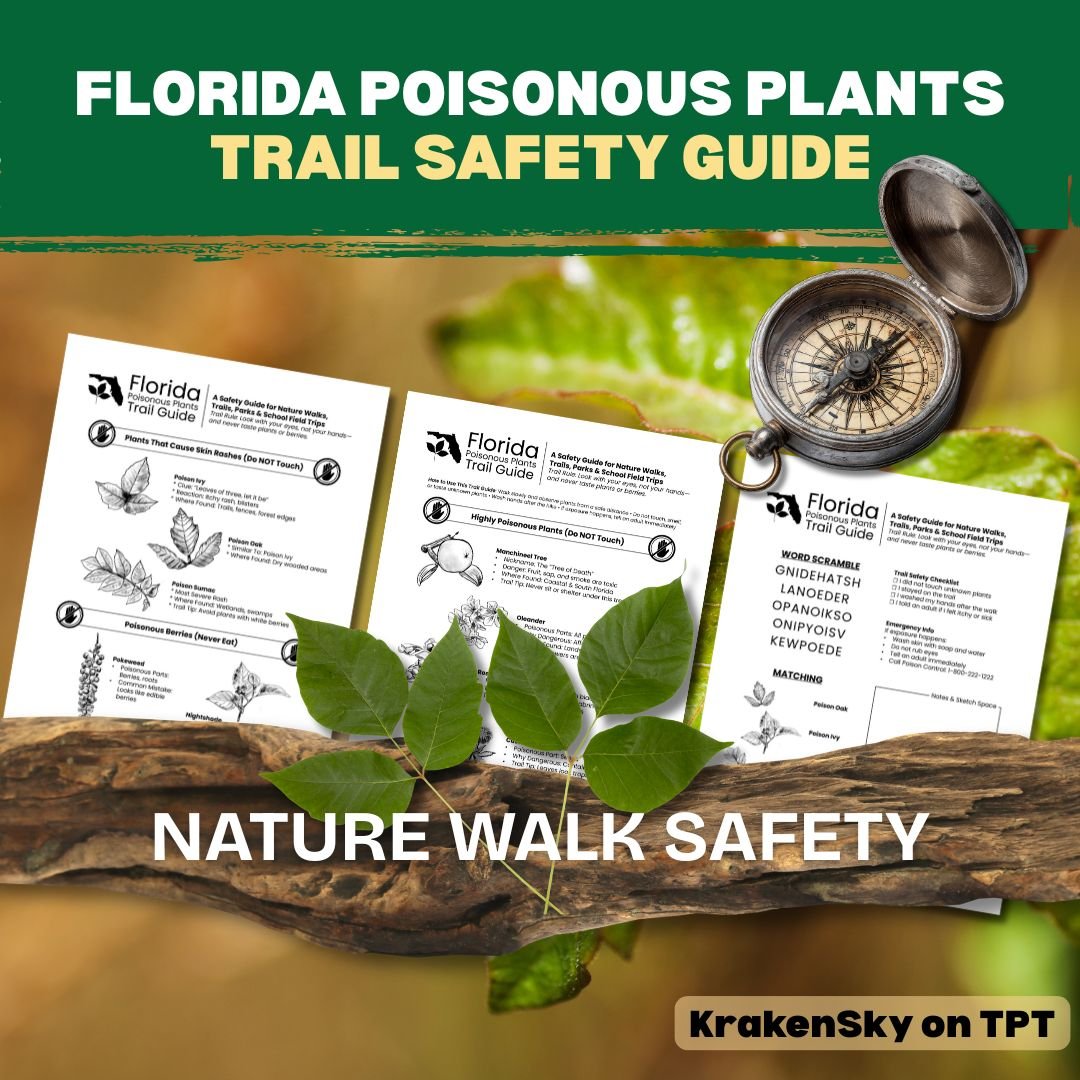
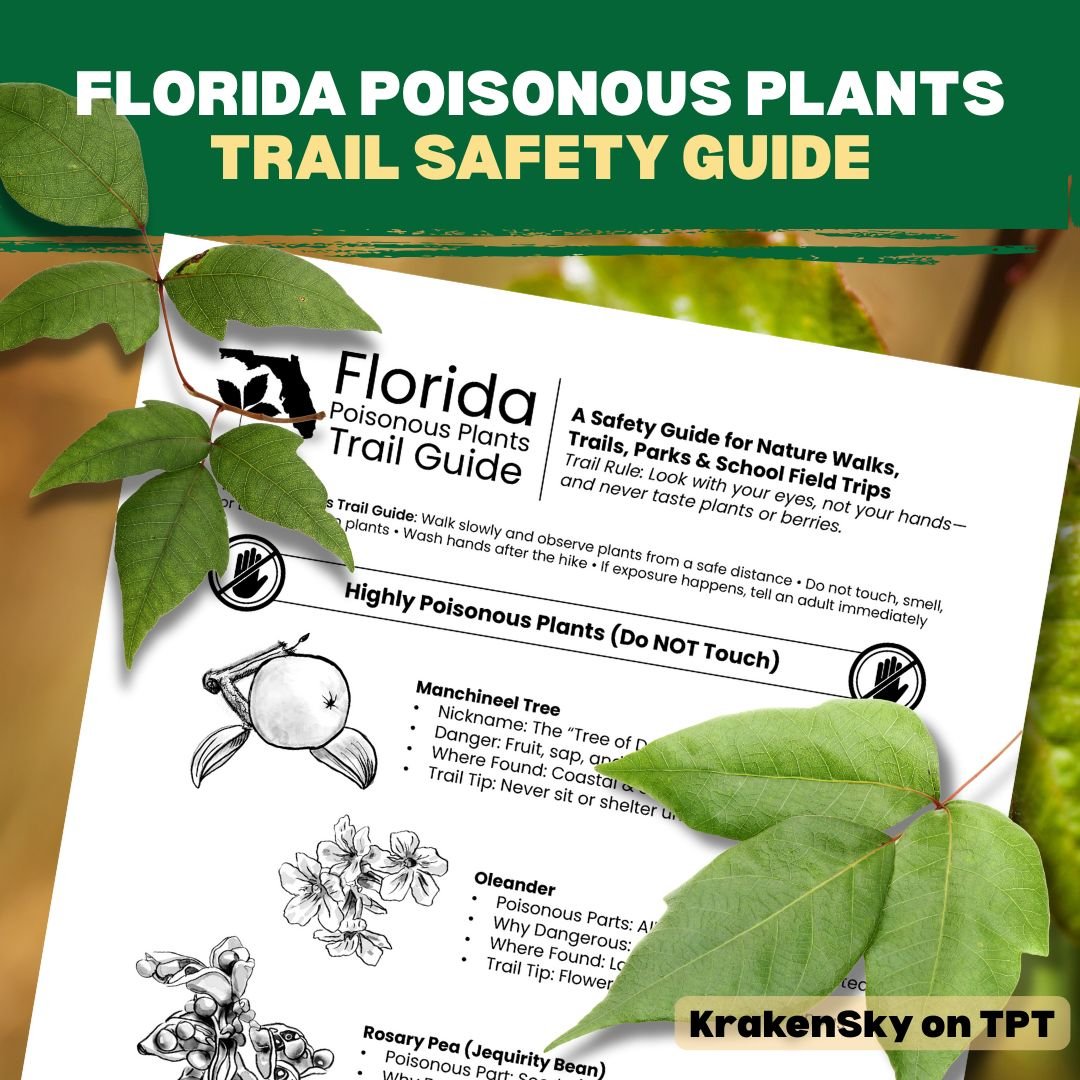
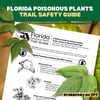
✔ Illustrated Florida poisonous plant identification pages
✔ Clear safety icons and “Do NOT Touch” reminders
✔ Real-world trail safety checklist for kids
✔ Word scramble & matching activity for review
✔ Notes & sketch page for field journaling
✔ Emergency response tips (including Poison Control info)
Plants covered include:
- Manchineel Tree
- Oleander
- Rosary Pea (Jequirity Bean)
- Castor Bean Plant
- Poison Ivy
- Poison Oak
- Poison Sumac
- Pokeweed
- Nightshade
Perfect For
- Grades 2–6
- Nature walks & outdoor learning
- Florida ecosystems & plant studies
- Field trips, camps, parks, and nature centers
- Homeschool & environmental education programs
- Trail safety and outdoor readiness lessons
A practical, classroom-tested resource teachers trust for outdoor learning.
Curriculum Alignment
Next Generation Science Standards (NGSS)
- 2-LS4-1 – Observe plant diversity in different environments
- 3-LS4-3 – Understand survival and environmental interactions
- 4-LS1-1 – Structures that help organisms survive
- 5-LS2-1 – Relationships in ecosystems
Common Core State Standards (CCSS – ELA)
- RI.3–5.1 – Ask and answer questions using informational text
- SL.3–5.1 – Collaborative discussions
- W.3–5.2 – Informative writing & observations
Skills Students Practice
- Plant identification & classification
- Environmental awareness & safety
- Observational drawing and journaling
- Science vocabulary development
- Real-world problem solving
Ideal for homeschool families, camps, parks, and nature centers exploring Florida plants.