
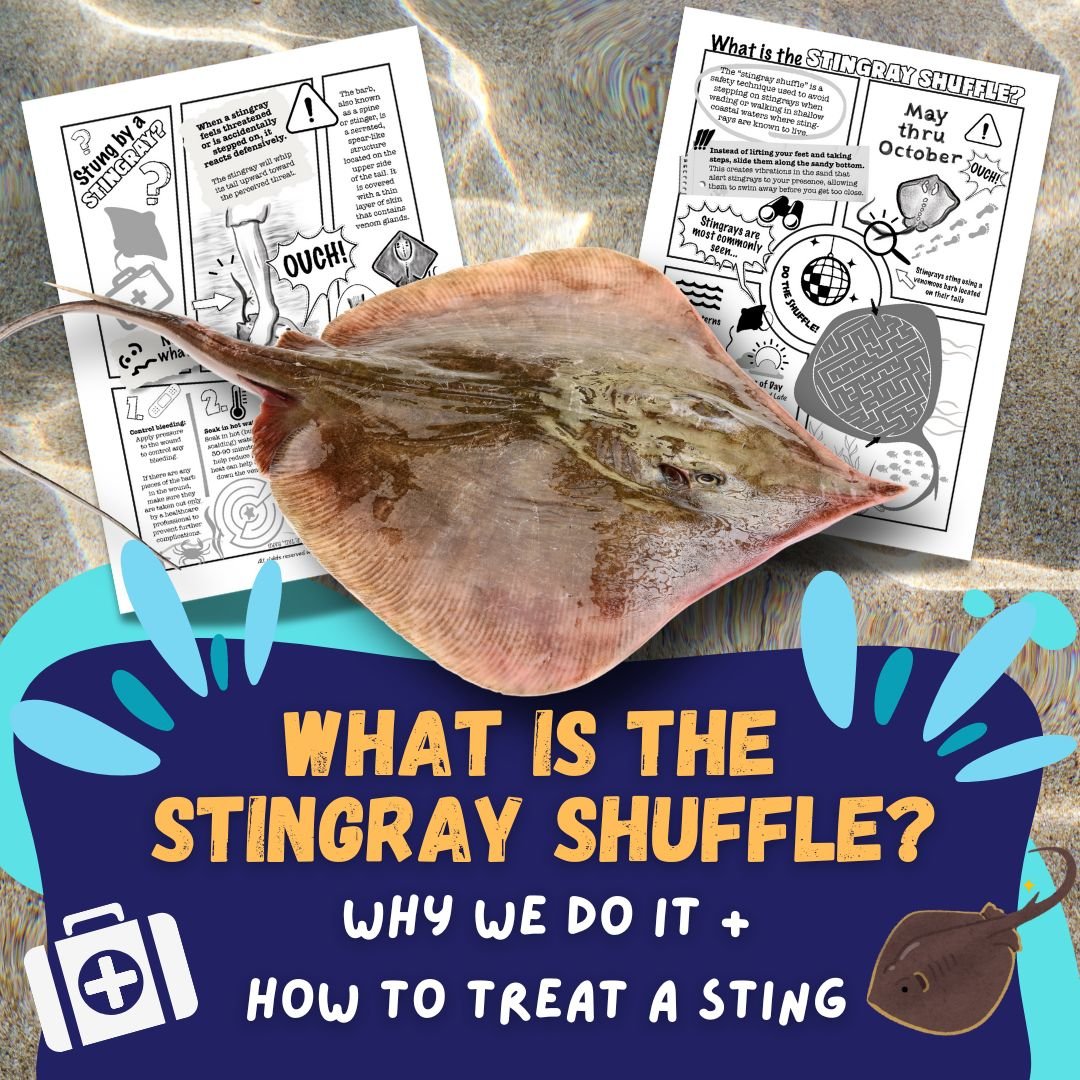
What is the STINGRAY SHUFFLE? Why we do it + How to treat a sting
What is the STINGRAY SHUFFLE? Why we do it + How to treat a sting
The Stingray Shuffle | Ocean Safety & Marine Life Science Activity
Instead of lifting your feet and taking steps, slide them along the sandy bottom...
Also see: Cownose Stingray Facts + Word Search Activity (Ocean Science Printable)
Teach students about ocean safety and marine life with this engaging Stingray Shuffle resource! Kids will learn how stingrays protect themselves, why the “stingray shuffle” is important, and what to do in case of a sting. This resource blends science, safety, and fun with clear explanations, visuals, and interactive activities.
Perfect for lessons on marine biology, ocean ecosystems, and personal safety, this printable includes both factual content and a word scramble activity to reinforce key vocabulary. Great for science centers, sub plans, or beach-themed units!
What’s Included:
✔️ Explanation of the stingray shuffle technique
✔️ Facts about stingray behavior, barb anatomy, and venom
✔️ First aid steps for stingray injuries (kid-friendly and clear)
✔️ Information on tidal patterns and times stingrays are active
✔️ Ocean joke for engagement
✔️ Vocabulary unscramble activity with answer key
Curriculum Alignment
Next Generation Science Standards (NGSS):
- 3-LS4-3: Construct an argument with evidence that in a particular habitat some organisms can survive well, some less well, and some not at all.
- 4-LS1-1: Construct an argument that animals have structures that support survival, growth, and behavior.
- MS-LS2-2: Predict patterns of interactions among organisms across ecosystems.
- MS-LS1-8: Gather and synthesize information on behaviors that increase survival chances.
Cross-Curricular Connections:
- Science: Marine biology, adaptations, ecosystems
- Health & Safety: Ocean safety and first aid awareness
- ELA: Vocabulary building through unscramble puzzle