
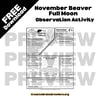
November Full Moon Activity | Beaver Moon Observation Worksheet
November Full Moon Activity | Beaver Moon Observation Worksheet
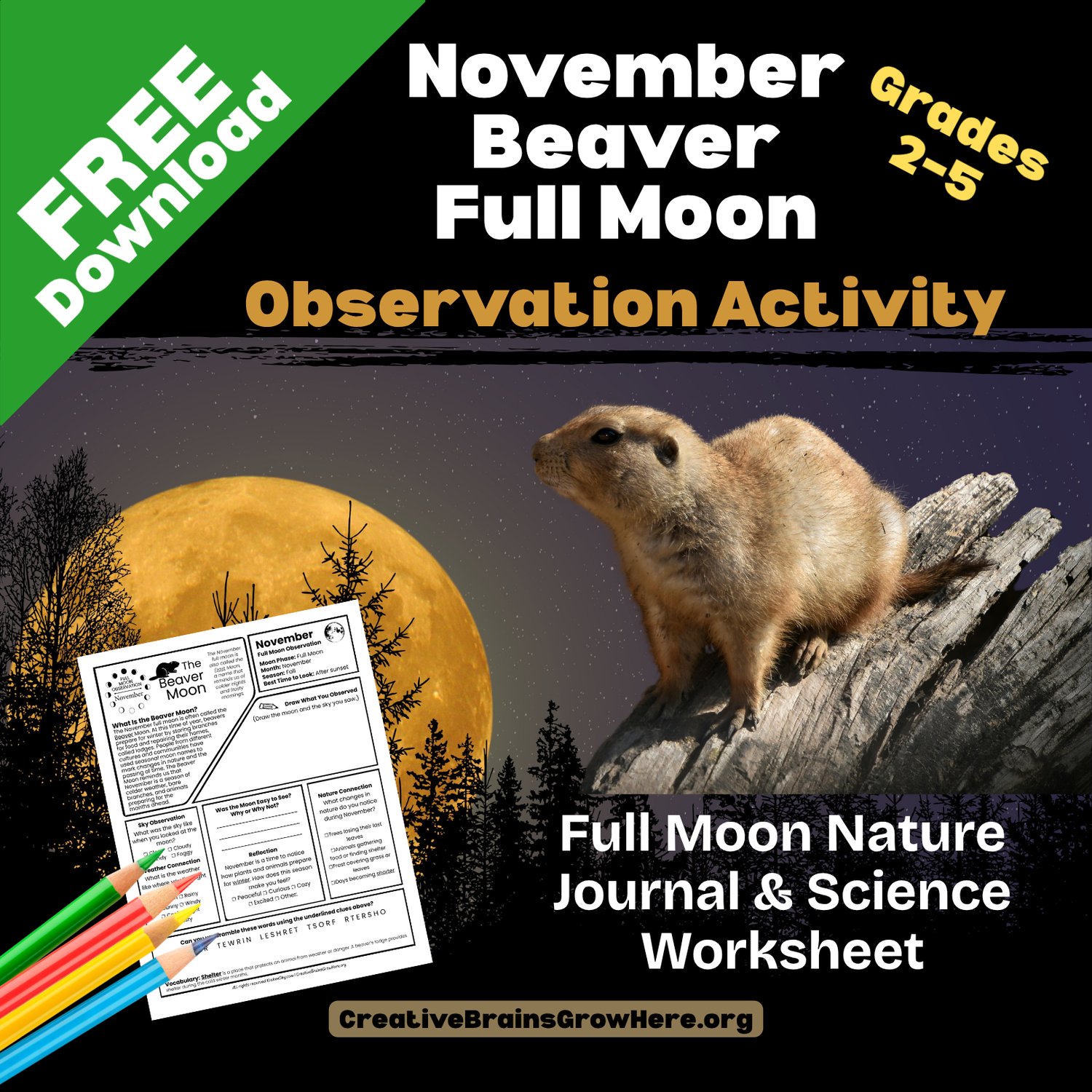
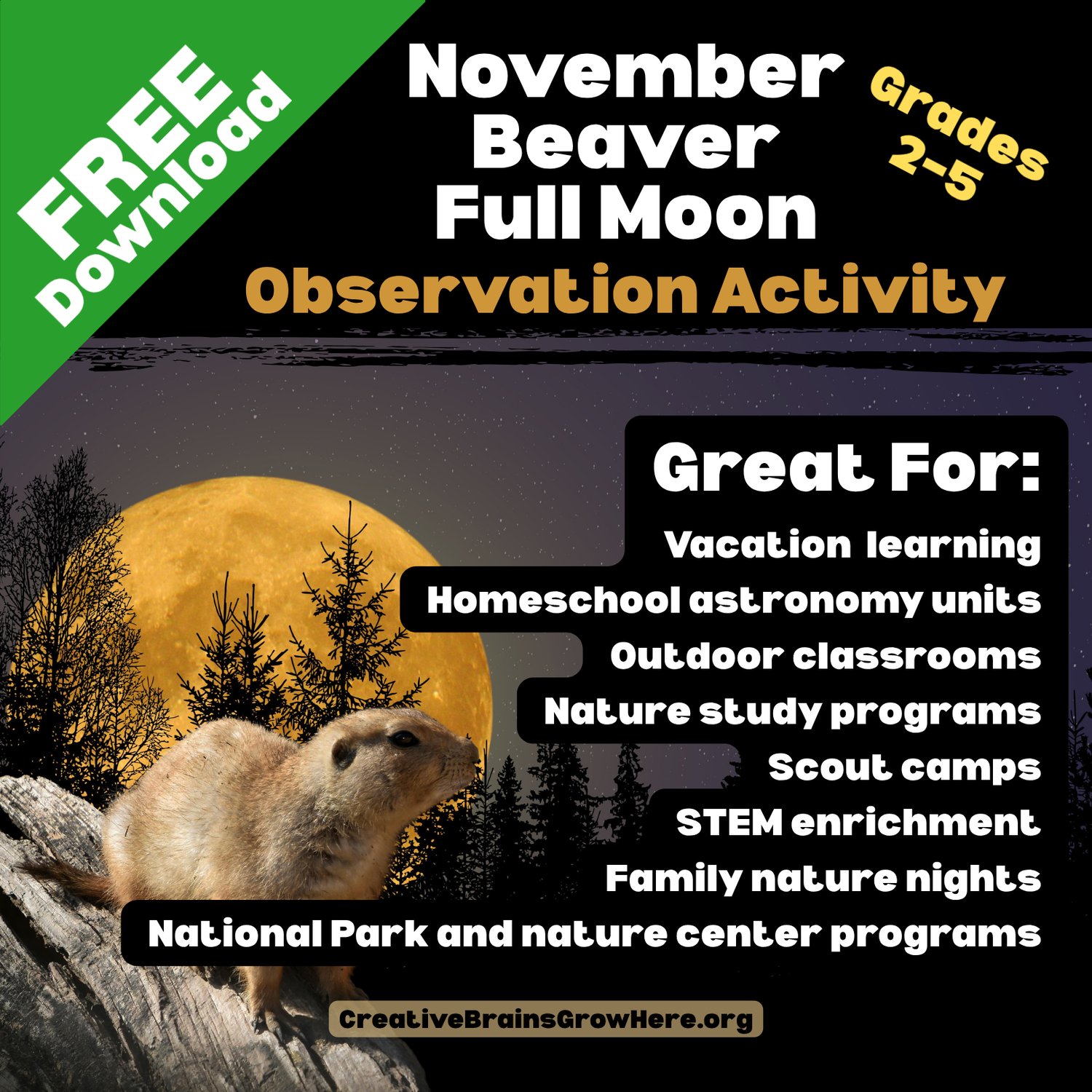
Bring November science learning outdoors with this Beaver Moon observation activity! This one-page worksheet connects the full moon to fall weather, seasonal changes, and how animals prepare for winter.
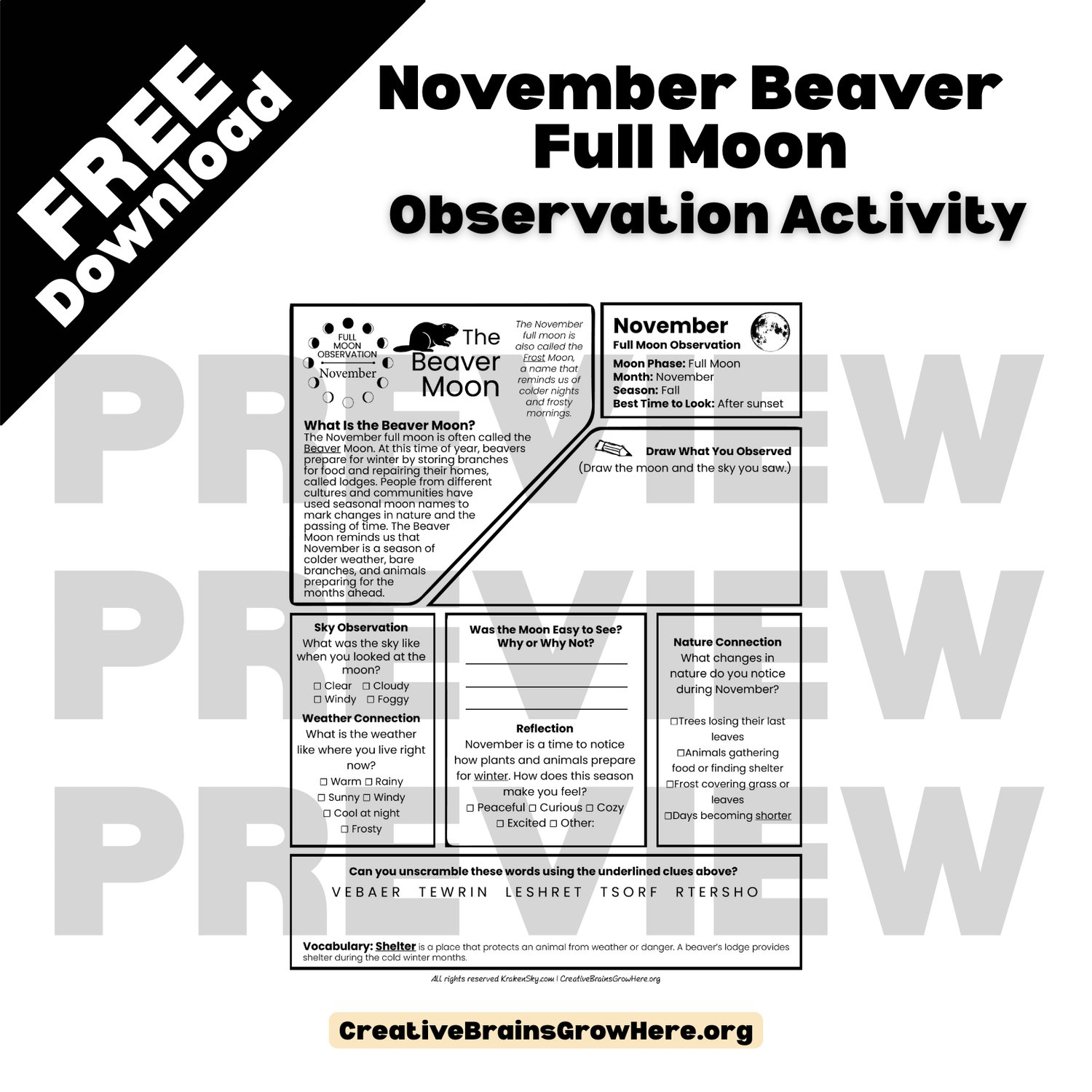
Students learn about the Beaver Moon, also called the Frost Moon, then record their own observations through drawing, writing, and simple checklists. A vocabulary definition and five-word scramble add literacy practice to their nature study.
What’s included on the page:
- An informational passage about the Beaver Moon
- Full moon facts and suggested viewing time
- Space to draw the moon and surrounding sky
- Sky and weather observation checklists
- A written response about moon visibility
- A checklist of November changes in nature
- A seasonal feelings reflection
- A five-word scramble with underlined clues
- A definition of the word “shelter”
Ways to use this activity:
- Send home for an evening moon observation with families.
- Add to a moon, weather, or fall science unit.
- Include in a nature journal or monthly observation routine.
- Use for homeschool science and seasonal learning.
The black-and-white layout is easy to print, and the activity has no year-specific date, so you can use it each November.
Seasonal references reflect fall in the Northern Hemisphere. Plan the outdoor observation portion for an evening near November’s full moon.
Frequently Asked Questions
How can I teach kids about the November full moon?
This November full moon worksheet introduces the Beaver Moon through a short reading passage, sky observation, drawing, and reflection. It connects moon study with familiar changes in weather, plants, and animals.
What is a Beaver Moon activity for elementary students?
Students observe the November full moon, draw what they see, record weather conditions, and notice seasonal changes. This Beaver Moon activity also includes vocabulary practice and a five-word scramble.
Can I use this full moon observation worksheet for homework?
Yes! Send the page home for students to complete an evening moon observation with a parent or caregiver. Students can share their drawings and compare observations back in class.
How can I include this activity in a homeschool moon study?
Use this printable full moon activity for kids as part of a homeschool science lesson or nature journal. Read about the Beaver Moon together, observe the evening sky, and discuss how animals prepare for winter.
Does this worksheet teach the phases of the moon?
This worksheet focuses on observing the full moon. It can complement a moon phases unit, but it does not teach the complete lunar cycle. Pair it with observations on other nights to help students compare the moon’s changing appearance.
What if the moon is hidden by clouds?
Students can still record sky conditions and explain why the moon was difficult to see. A cloudy evening offers a useful opportunity to discuss how weather affects nighttime sky observations.
What skills does this November science activity support?
The page provides practice in observation, informational reading, vocabulary, drawing, and written explanation. It also encourages students to connect seasonal changes with their own experiences.
Can I reuse this Beaver Moon worksheet each year?
Yes! The worksheet has no year-specific date. Check the date of November’s full moon each year and plan the observation for an evening near that date.
Is this a low-prep fall nature study activity?
Yes. Print the worksheet and provide pencils or drawing supplies. Its reading passage, checklists, and response prompts make it easy to add to a fall nature study, elementary science lesson, or family learning activity.