
Beluga Whale Facts & Size Comparison Activity Sheet
Beluga Whale Facts & Size Comparison Activity Sheet
Beluga Whale Size Comparison | Marine Mammals & Ocean Life Science
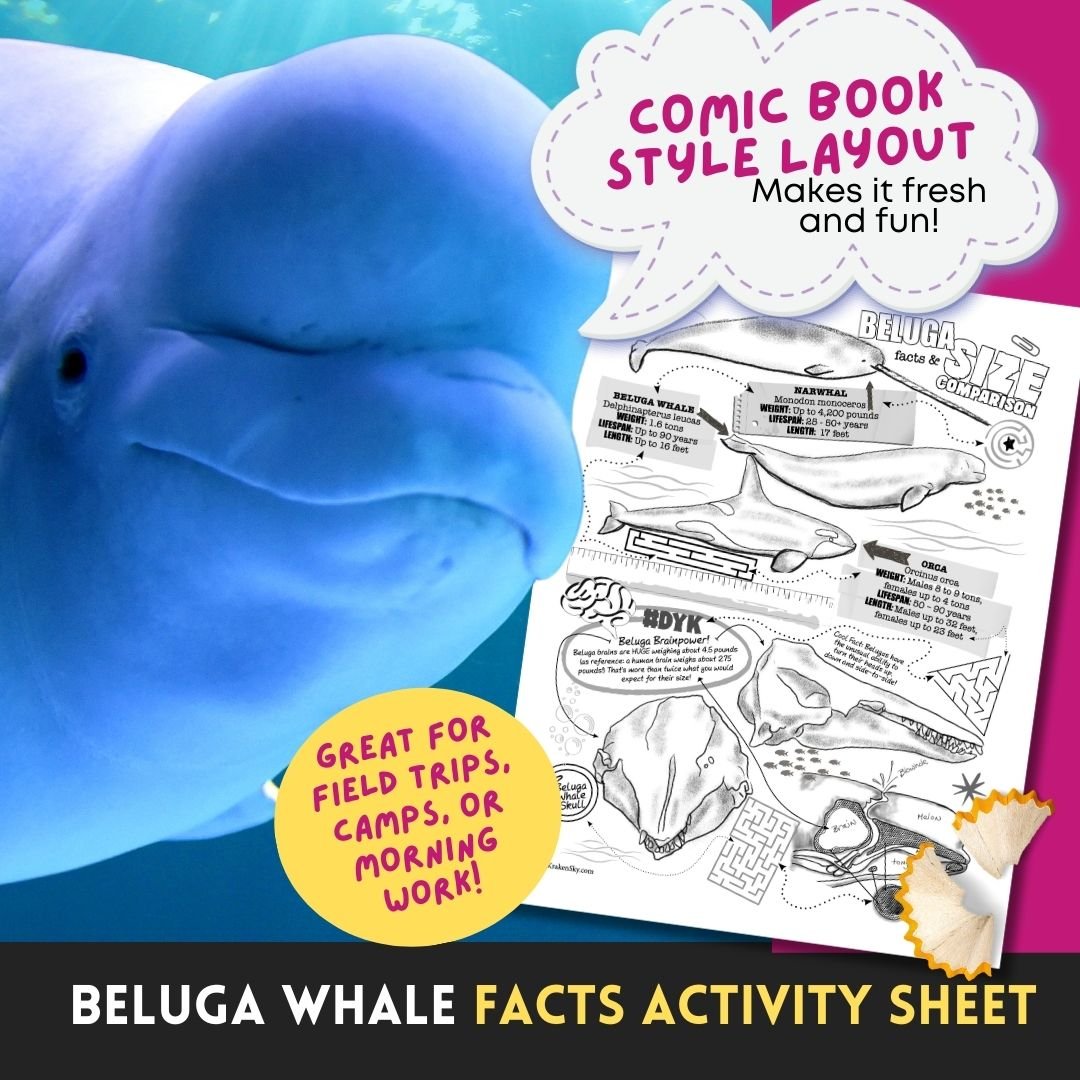
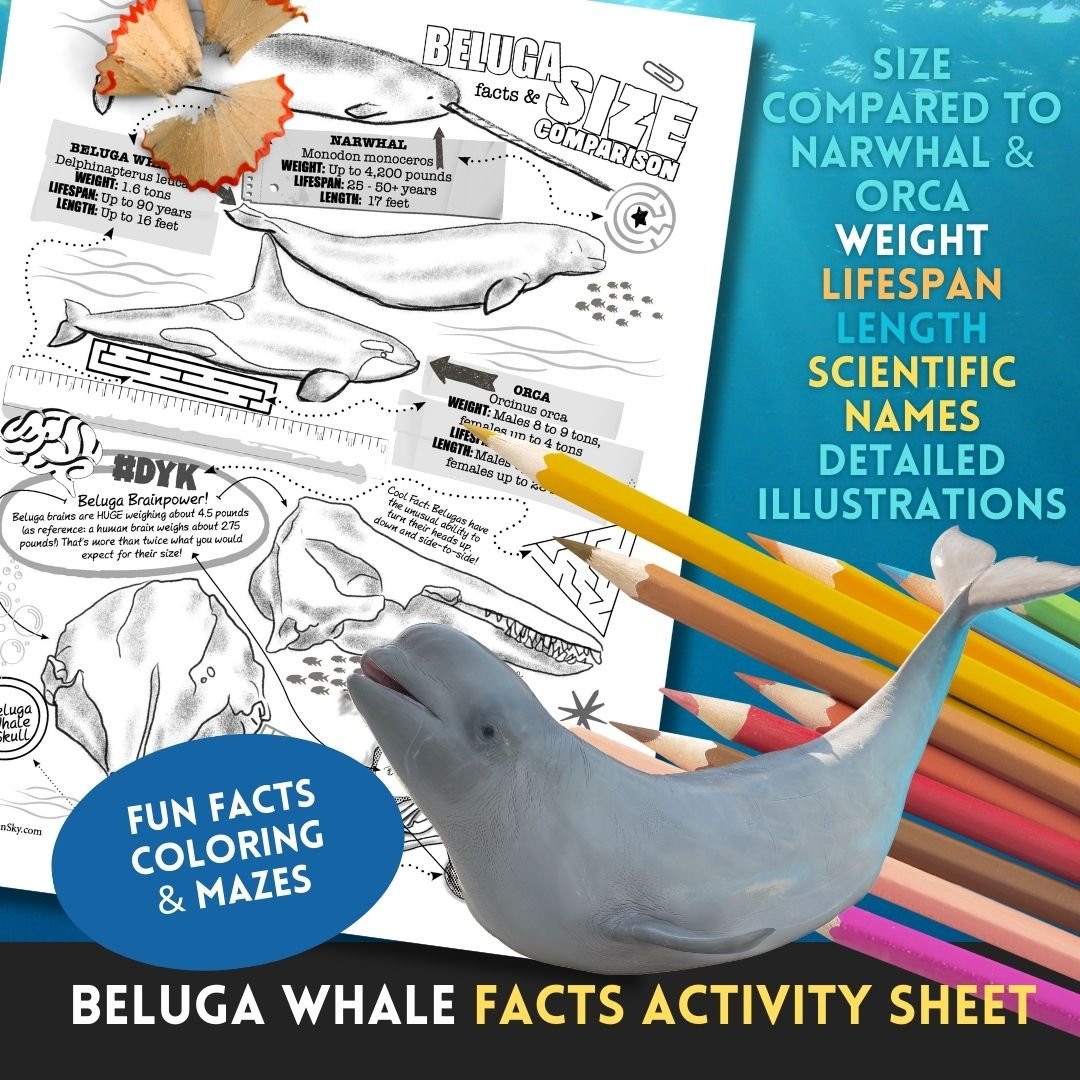
Students will explore fascinating facts about belugas, orcas, and narwhals, comparing their sizes, lifespans, and unique adaptations. They’ll also learn about beluga brainpower, skull flexibility, and fun #DYK facts that make these Arctic whales truly one-of-a-kind.
Perfect for lessons on adaptations, ecosystems, and marine mammals, this printable is easy to integrate into science centers, research projects, and informational text activities.
What’s Included:
✔️ Beluga, orca, and narwhal size comparison chart
✔️ Brain facts and unique anatomy (skull mobility)
✔️ Fun #DYK facts for student engagement
✔️ Clear, student-friendly text and visuals
✔️ Great for grades 3–6 life science, ocean units, or Arctic studies
Curriculum Alignment
Next Generation Science Standards (NGSS):
- 3-LS4-3: Construct an argument with evidence that some animals can survive well, less well, or not at all in certain habitats.
- 4-LS1-1: Construct an argument that animals have internal and external structures that support survival, growth, and behavior.
- 5-PS3-1: Use models to describe how energy flows in ecosystems (belugas and orcas as consumers in food webs).
- MS-LS2-2: Predict patterns of interactions among organisms in ecosystems, including predator-prey relationships.
Common Core State Standards (CCSS - ELA):
- CCSS.ELA-LITERACY.RI.3.3: Describe the relationship between a series of scientific ideas or concepts.
- CCSS.ELA-LITERACY.RI.4.1: Refer to details and examples when explaining scientific texts.
- CCSS.ELA-LITERACY.RI.5.7: Draw on information from multiple sources to answer questions.
- CCSS.ELA-LITERACY.RST.6-8.7: Integrate visual information (charts, diagrams) with words to understand scientific concepts.