
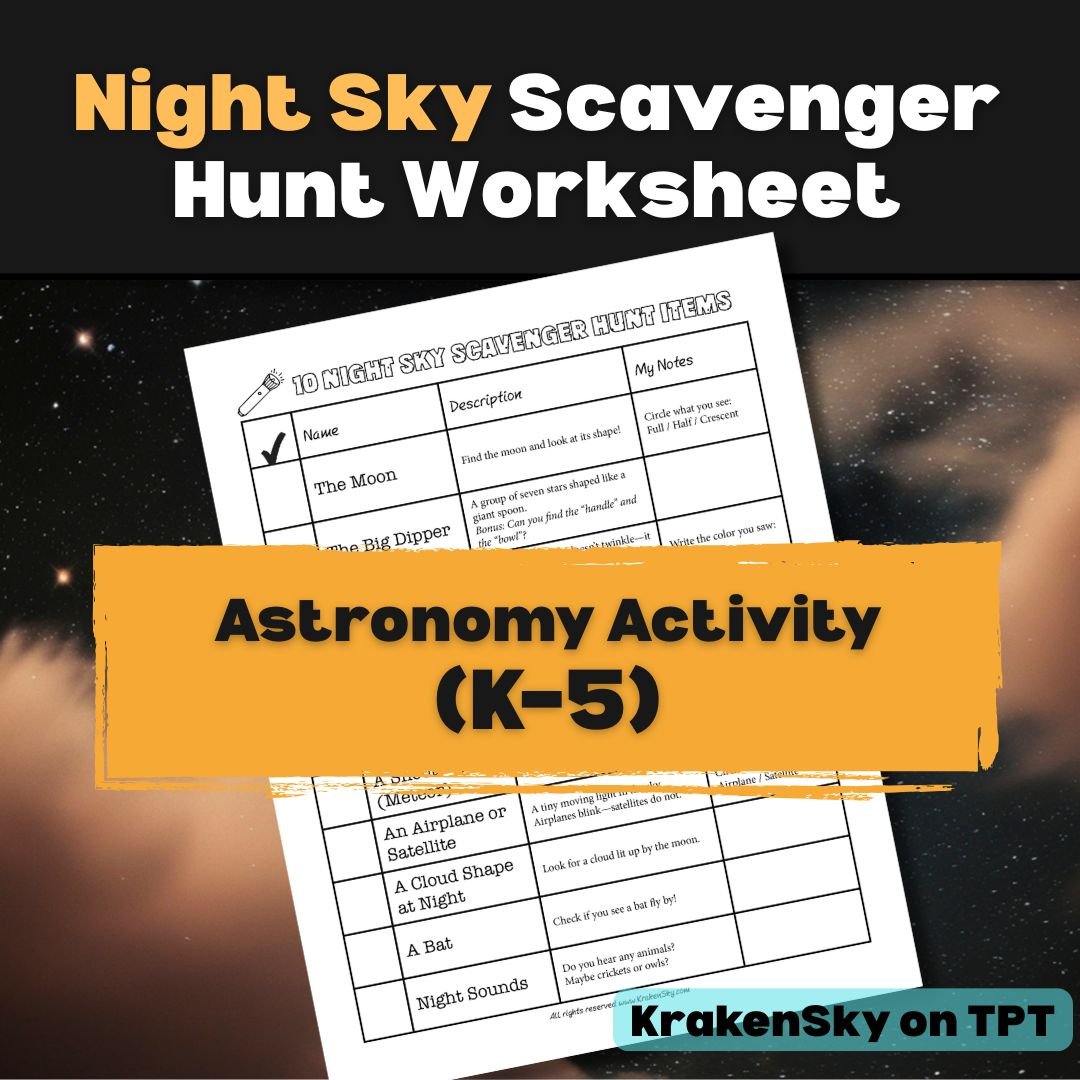
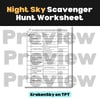
Night Sky Scavenger Hunt Worksheet – Astronomy Activity for Kids (K–5)
Night Sky Scavenger Hunt Worksheet – Astronomy Activity for Kids (K–5)
Perfect for: Science centers, STEAM lessons, outdoor learning, nature journaling, homework extensions, family STEM nights, and early finishers!
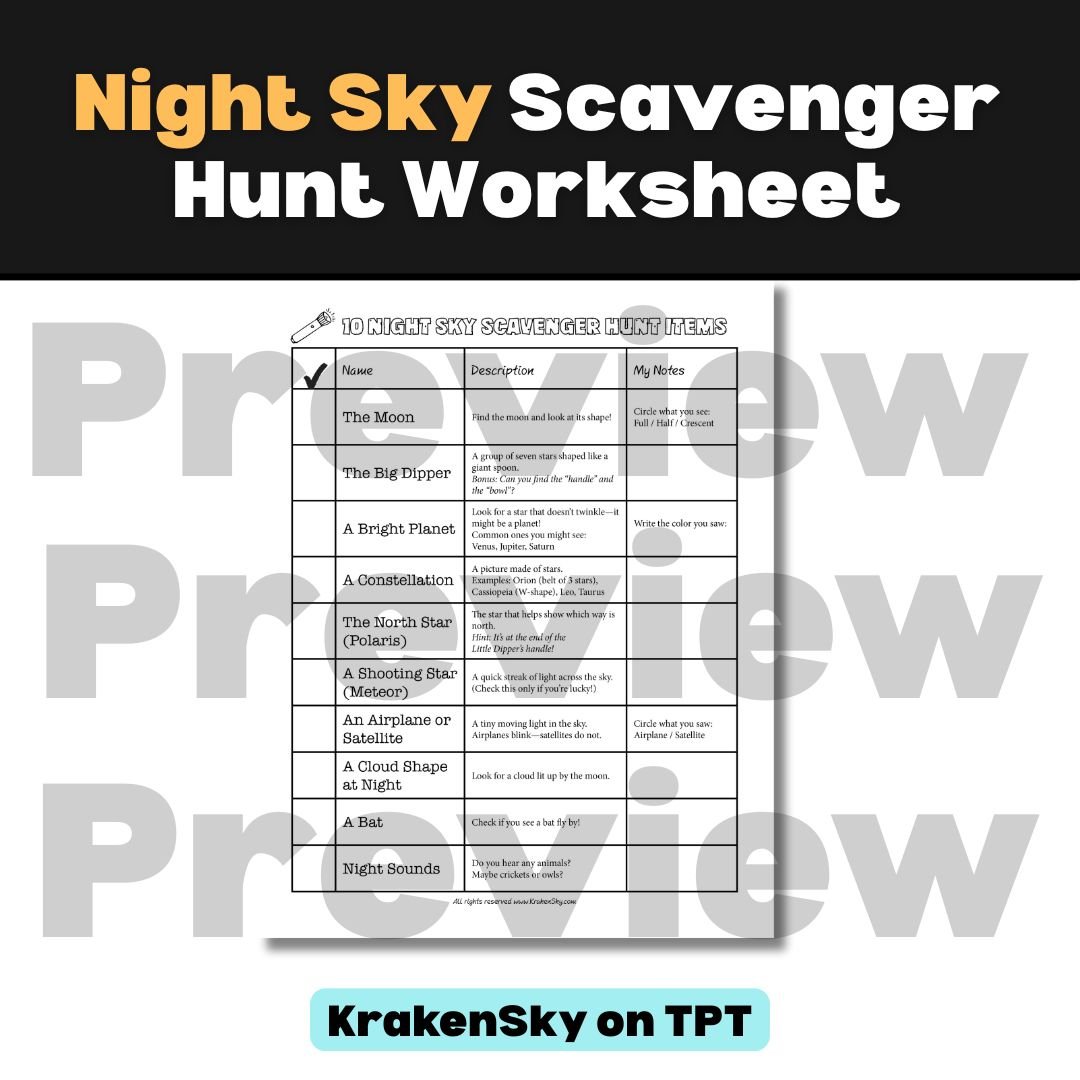
Make stargazing magical with this print-and-go Night Sky Scavenger Hunt that teaches kids how to observe the moon, stars, constellations, planets, and nighttime wildlife. This engaging activity helps students slow down, look closely, and build real-world science skills while having fun under the night sky.
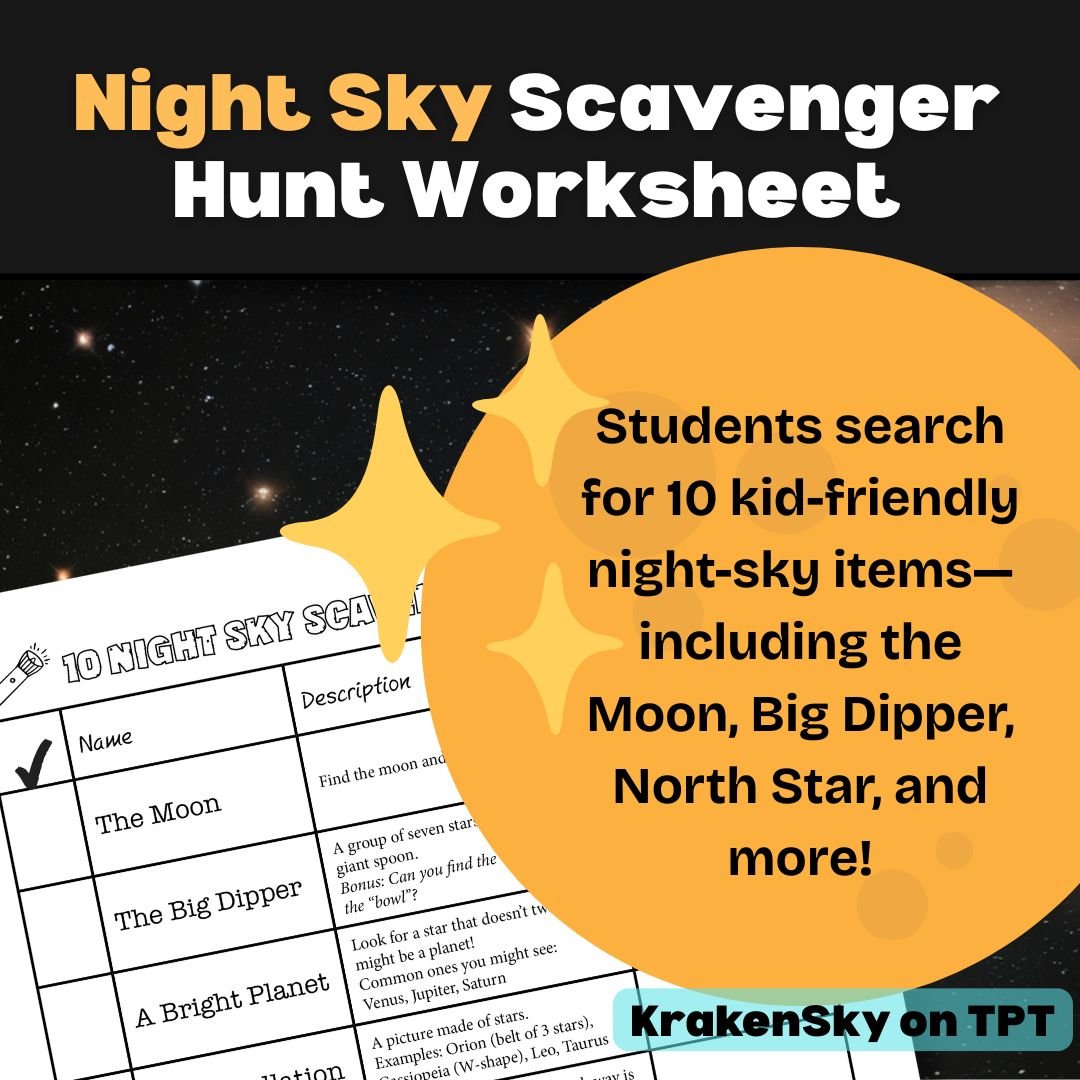
Students search for 10 kid-friendly night-sky items—including the Moon, Big Dipper, North Star, a bright planet, and more.
The worksheet includes simple descriptions, bonus challenges, and a “My Notes” section to encourage scientific thinking, drawing, labeling, and reflective writing.
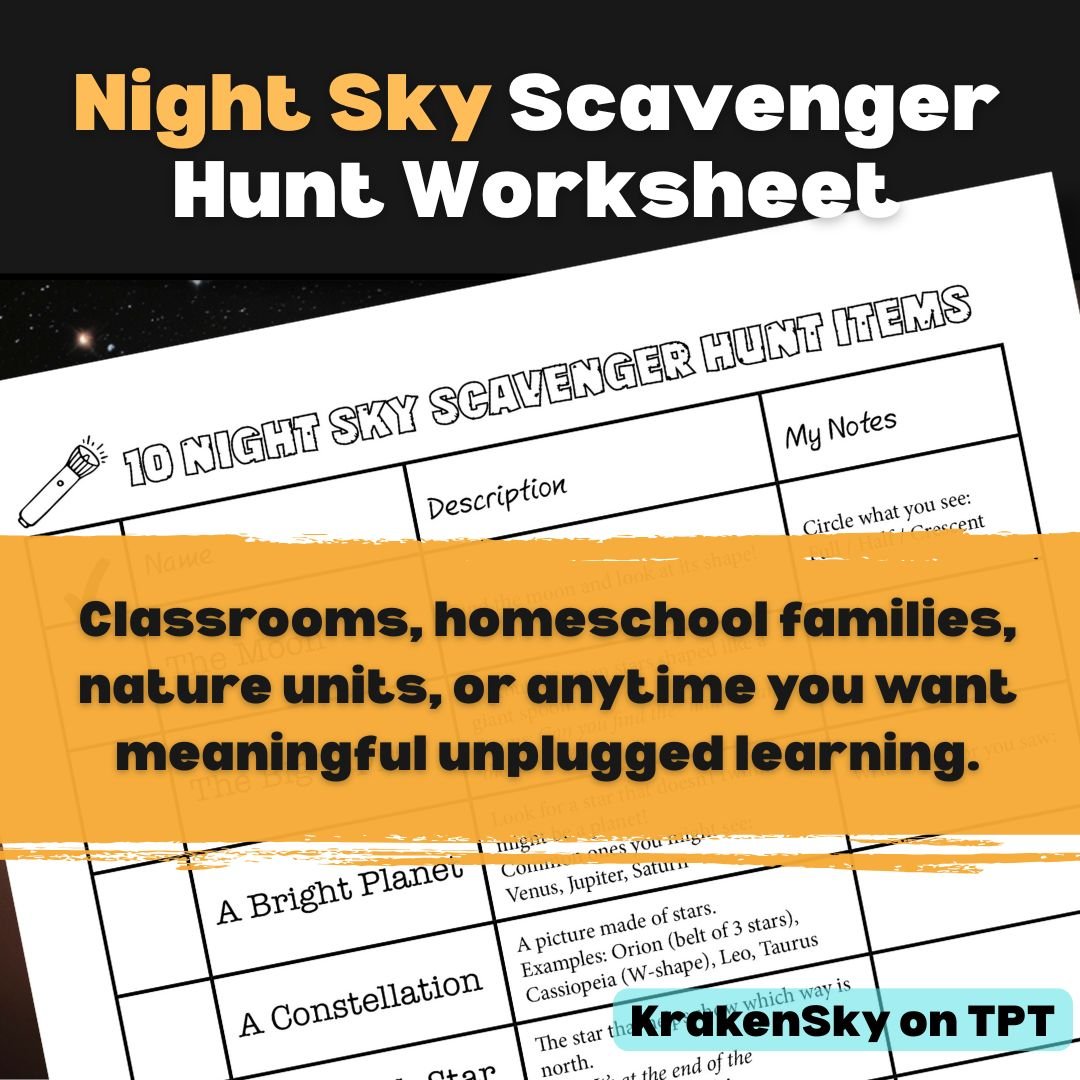
This activity is ideal for classrooms, homeschool families, nature units, or anytime you want meaningful unplugged learning.
What’s Included
- 1-page Night Sky Scavenger Hunt printable
- Clear descriptions to guide student observations
- Note-taking prompts for drawing, circling, or writing
- Mix of astronomy + nature science to support cross-curricular learning
Skills Students Practice
- Observation and description
- Identifying constellations and planets
- Understanding moon phases
- Noticing patterns in nature
- Recording data like a scientist
- Writing or sketching reflections
NGSS Alignment
K-LS1-1 – Use observations to describe patterns of what plants and animals need to survive (night sounds, bats).
1-ESS1-1 – Use observations of the sun, moon, and stars to describe predictable patterns.
1-ESS1-2 – Make observations at different times of year to relate sunlight and star visibility.
3-PS2-2 – Make observations to provide evidence of motion (tracking satellites, planets).
5-ESS1-2 – Represent data to show daily changes in shadow length, day/night cycles, and sky patterns.
CCSS ELA Alignment
RI.K–3.1 – Ask and answer questions about key details (What did you see? How do you know?).
W.K–3.2 – Write informative/explanatory notes or descriptions.
W.K–3.8 – Recall or gather information from observations to answer a question.
SL.K–3.4 – Report observations in complete sentences, describe details clearly.
Why Teachers Love It
✔ Low-prep—just print and go!
✔ Encourages outdoor learning and curiosity
✔ Can be used any time of year
✔ Works great as homework or a weekend family connection activity
✔ Supports both visual and written learners
Make Science Feel Magical
Bring astronomy to life with a simple, engaging scavenger hunt that builds observation skills, inspires wonder, and gets kids excited about exploring the world around them—day or night!
❤️This resource has been donated to educators by CreativeBrainsGrowHere.org
Follow on social media @CreativeBrainsGrowHere ❤️ Donate Here