
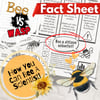
Bee Vs Wasp Fact Sheet - Compare & Contrast + Citizen Science
Bee Vs Wasp Fact Sheet – Compare & Contrast + Citizen Science
Visual Learning + Real-World Engagement for Nature-Loving Kids!
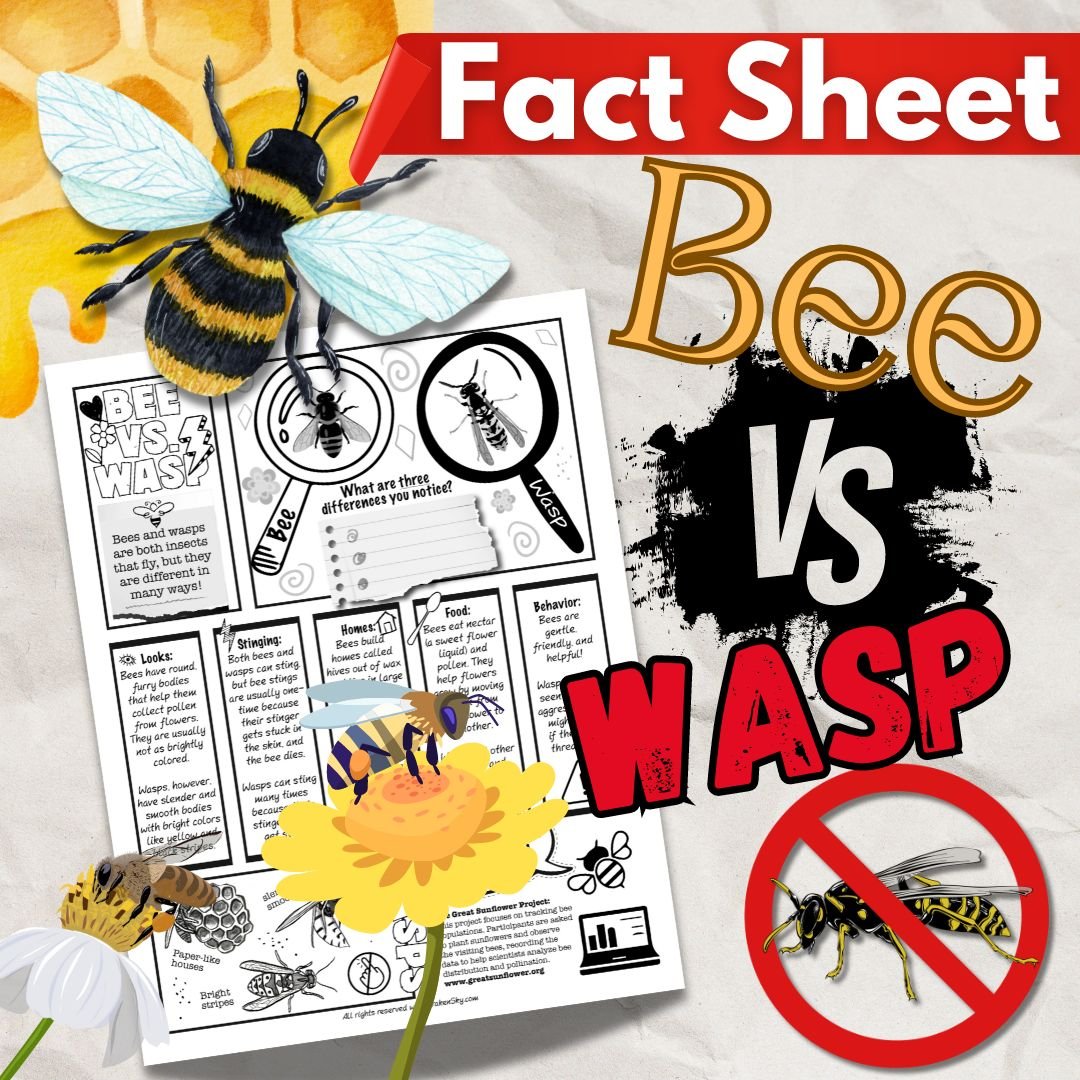
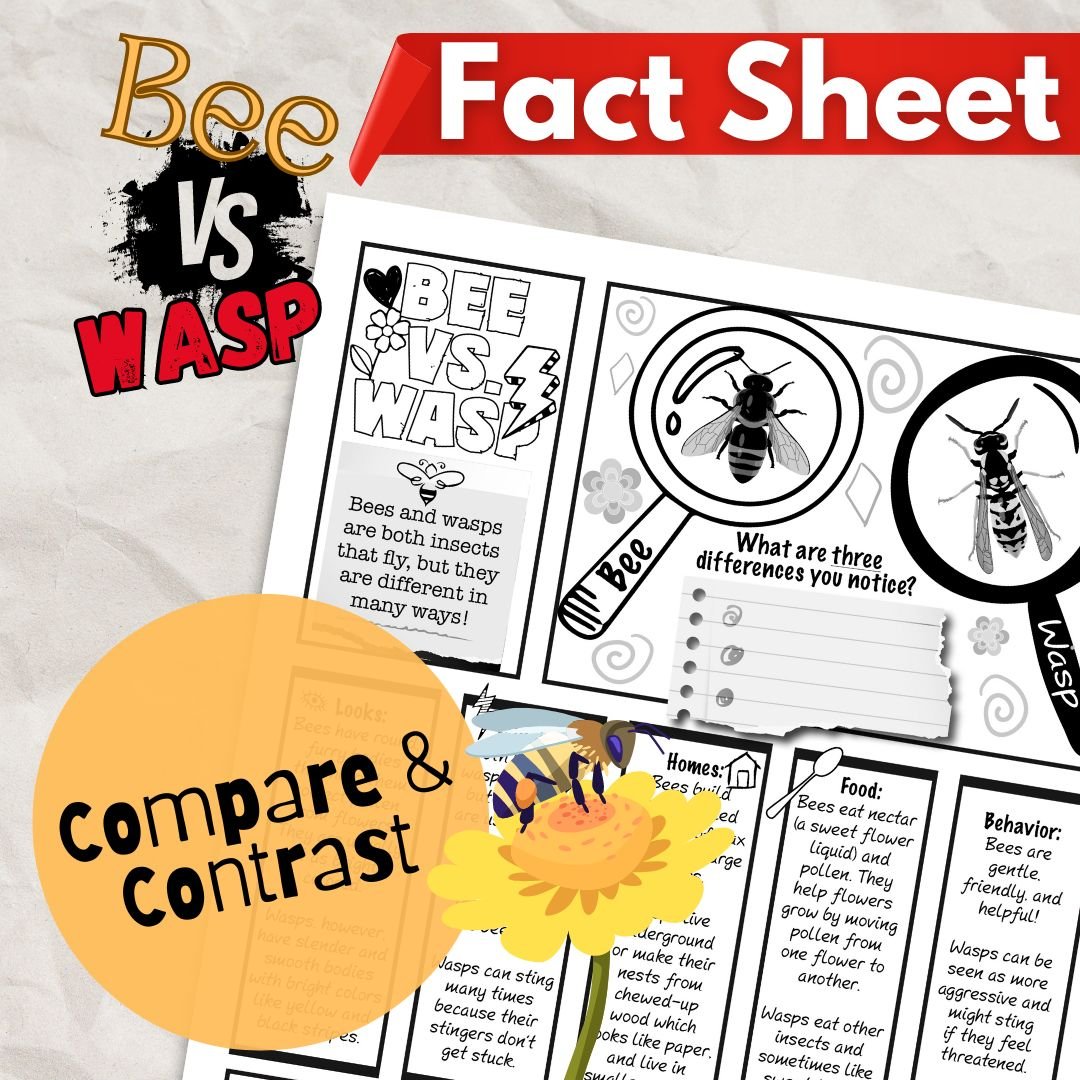
Help learners spot the difference between bees and wasps with this fun, educational Compare & Contrast Fact Sheet! Packed with illustrations, coloring areas, and side-by-side trait comparisons, this black-and-white printable is perfect for classrooms, camps, nature centers, and backyard explorers.
What’s Inside:
Side-by-Side Comparison
- Easy-to-read layout comparing looks, behavior, homes, food, and stinging abilities
- Visual and written traits help students distinguish between bees and wasps
Coloring Sections
- Reinforce learning through creativity
- Ideal for multiple learning styles (visual, kinesthetic, reading/writing)
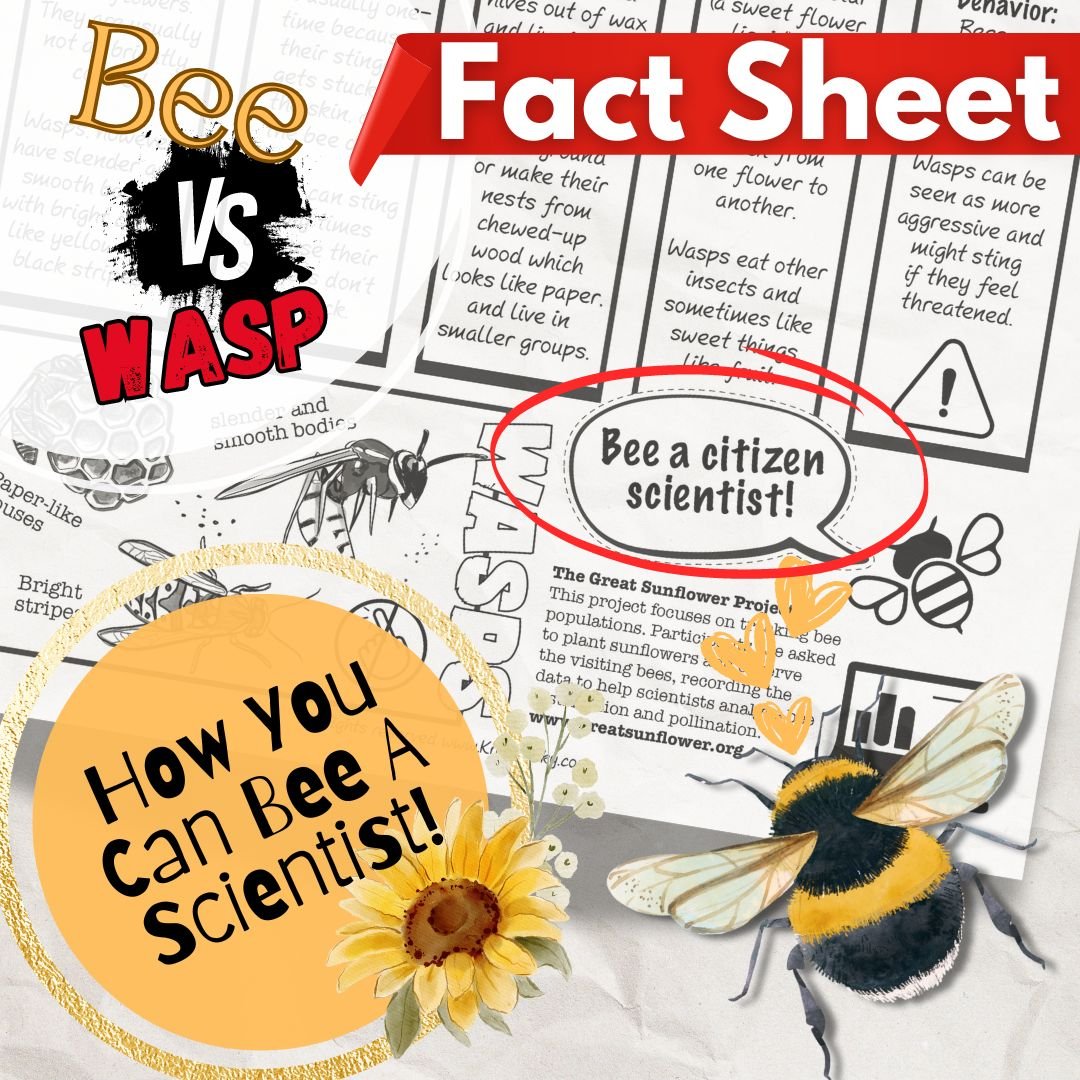
Citizen Science Opportunity
- Encourages learners to observe and record real-life sightings
- Connects classroom learning to the natural world
Quick Facts Covered:
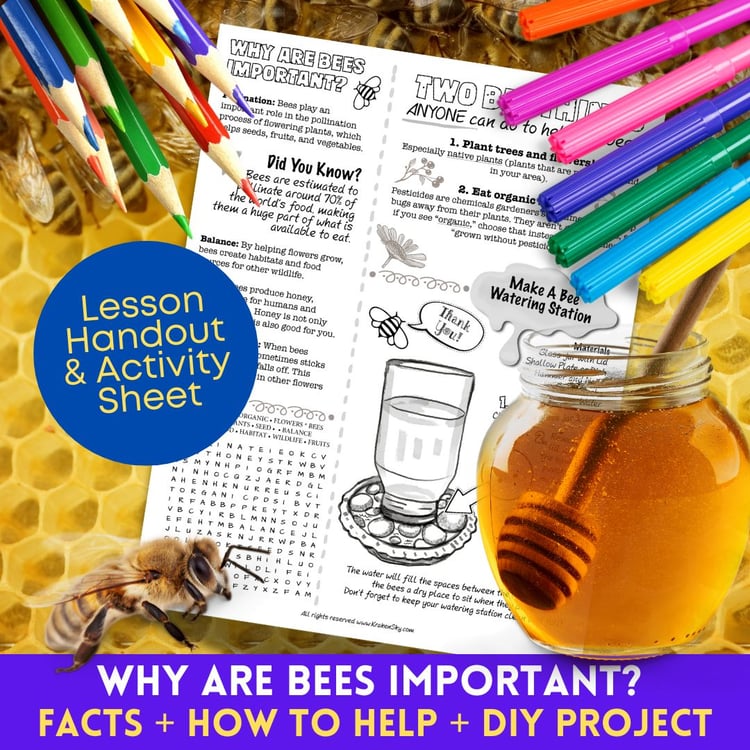
- Bees: round, furry, gentle, and pollinators
- Wasps: slender, smooth, brightly colored, and predators
- Bee stings = one-time | Wasp stings = multiple
- Homes: hives vs. paper nests
- Diet: nectar & pollen vs. insects & fruit
Product Features:
- No Prep – Print-and-go format
- Black & white – Easy to copy and color
- Standard letter size (8.5" x 11")
- Great for field trips, classrooms, nature centers, and zoos
- Encourages independent exploration and hands-on learning
- Supports citizen science participation for real-world impact
- Gamification through observation – Great for reluctant readers!
- Best With: Crayons, colored pencils, or markers
Standards Alignment
Common Core ELA (CCSS.ELA-LITERACY)
• RI.2.1 / RI.3.1 / RI.4.1 – Ask and answer questions to demonstrate understanding of nonfiction texts.
• RI.2.3 / RI.3.3 / RI.4.3 – Describe relationships between scientific ideas (bee vs. wasp).
• RI.2.5 / RI.3.5 – Use text features and visuals to understand information.
• RI.2.9 / RI.3.9 / RI.4.9 – Compare and contrast the most important points in two texts on the same topic.
• W.2.2 / W.3.2 / W.4.2 – Write informative/explanatory texts to convey ideas clearly.
Next Generation Science Standards (NGSS)
• 2-LS2-2 – Develop a model that mimics the function of animals in pollination.
• 3-LS3-2 – Use evidence to support the explanation that traits can be influenced by the environment.
• 3-LS4-3 – Construct an argument that some animals survive well in particular habitats.
• 4-LS1-1 – Construct an argument that plants and animals have internal and external structures that support survival, growth, and reproduction.
Social Studies / C3 Framework Connections
• D2.Geo.4.3-5 – Explain how environmental characteristics influence animal behaviors.
• D2.Civ.10.3-5 – Identify ways people can responsibly participate in their communities (e.g., citizen science projects).
Bring science to life with this engaging and accessible activity sheet. Whether indoors or out in the field, kids will love learning how to tell these buzzing bugs apart—and maybe even join a citizen science project to help save pollinators!