
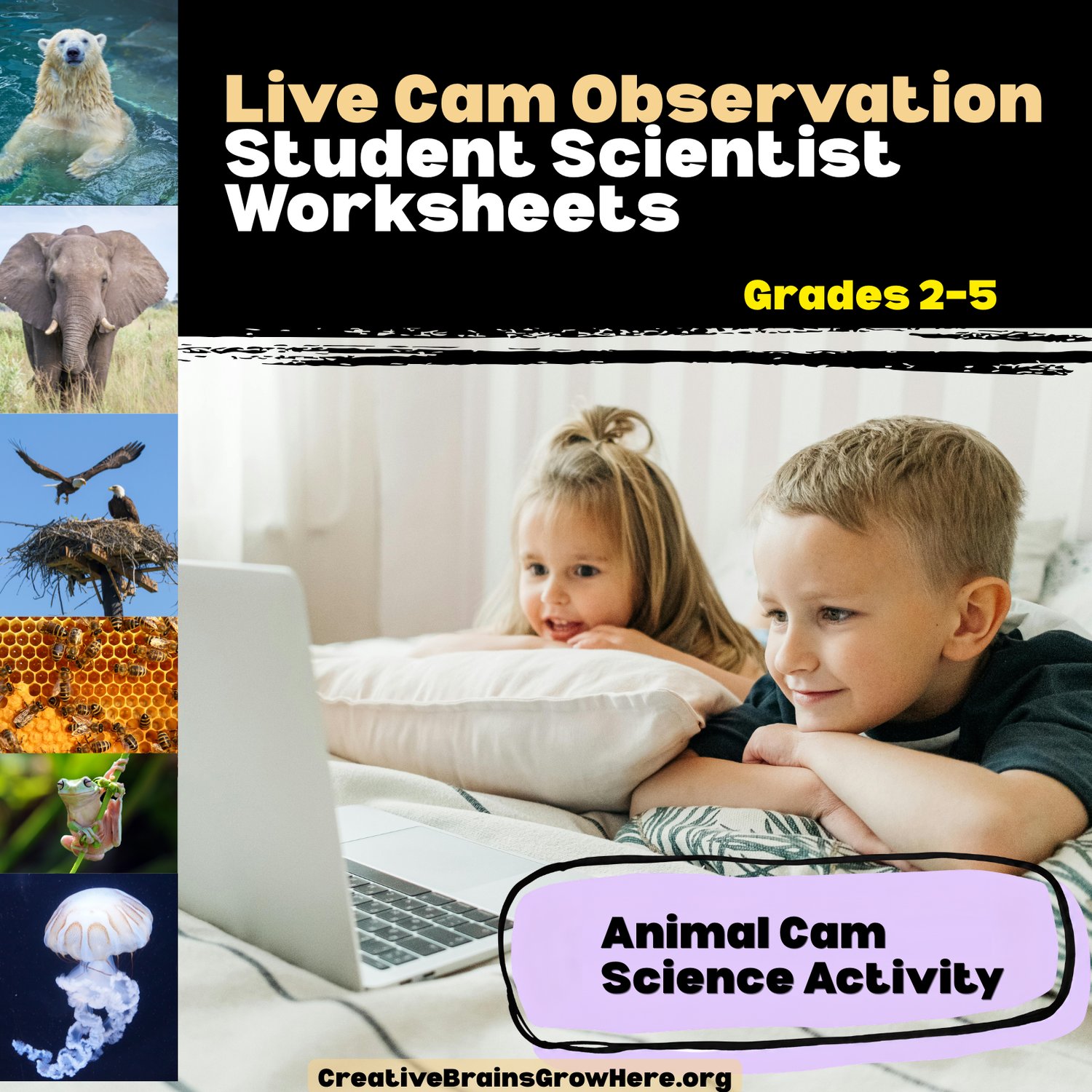
Live Cam Observation Student Scientist Worksheets | Animal Cam Science Activity | Printable Nature Journals
Live Cam Observation Student Scientist Worksheets | Animal Cam Science Activity | Printable Nature Journals
Bring the excitement of wildlife into your classroom, camp, or home with these Live Cam Observation Student Scientist Worksheets! Students become real scientists as they observe animals through live webcams, document their findings, analyze behaviors, ask questions, and make predictions based on evidence.
Perfect for classrooms, homeschool families, camps, nature centers, substitute plans, and screen-time-with-a-purpose activities, this printable pack transforms free animal webcams into meaningful, inquiry-based science experiences.
Whether students are watching bald eagle nests, underwater reef cameras, zoo animals, penguins, bears, sea otters, gorillas, or African watering holes, these observation pages encourage them to slow down, notice details, and think like scientists.
Prep:
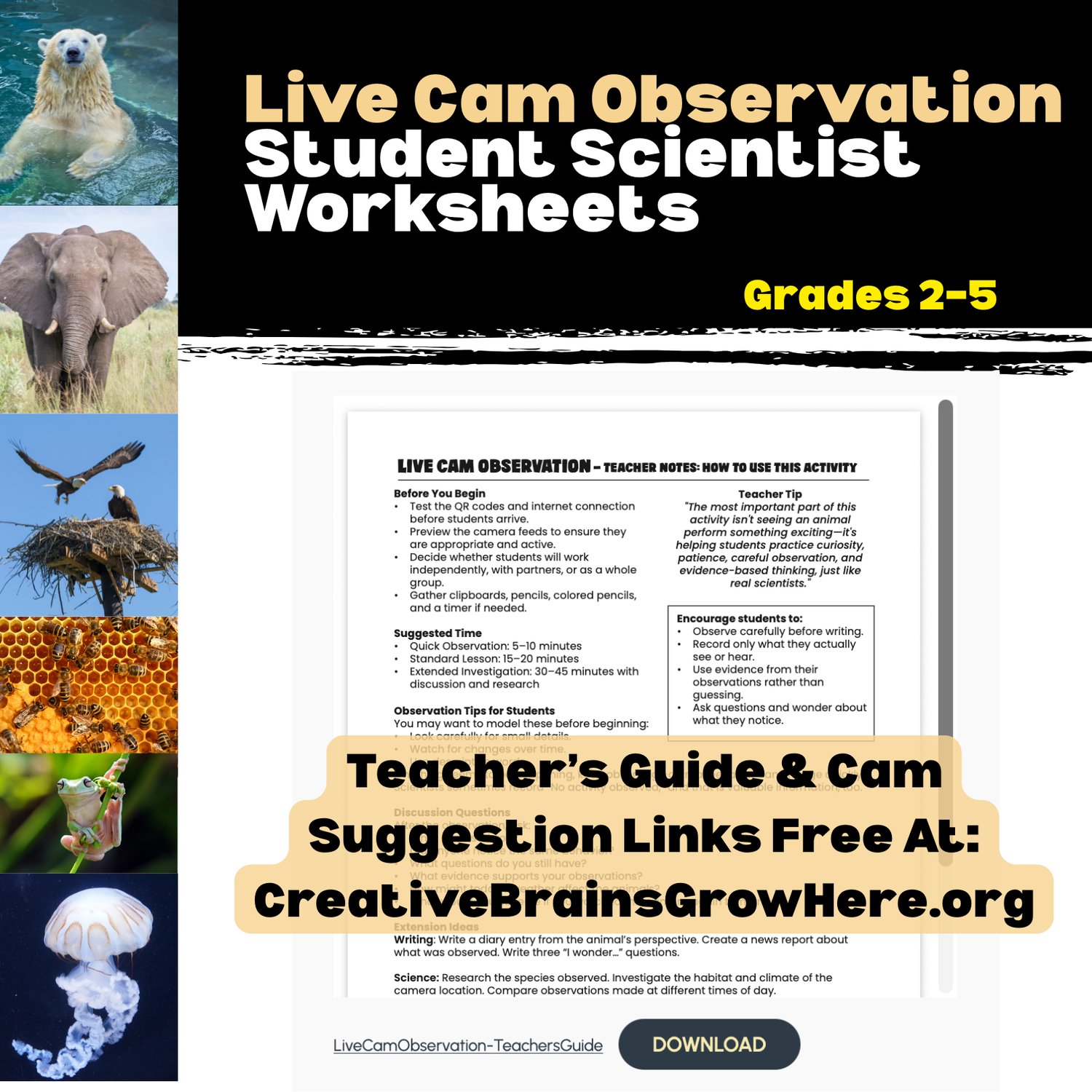
Print and go! Simply choose a live animal camera, hand out the worksheets, and let your students become wildlife scientists.
Grades:
2nd–5th Grade (easily adaptable for younger learners with teacher support or older students needing enrichment)
What's Included:
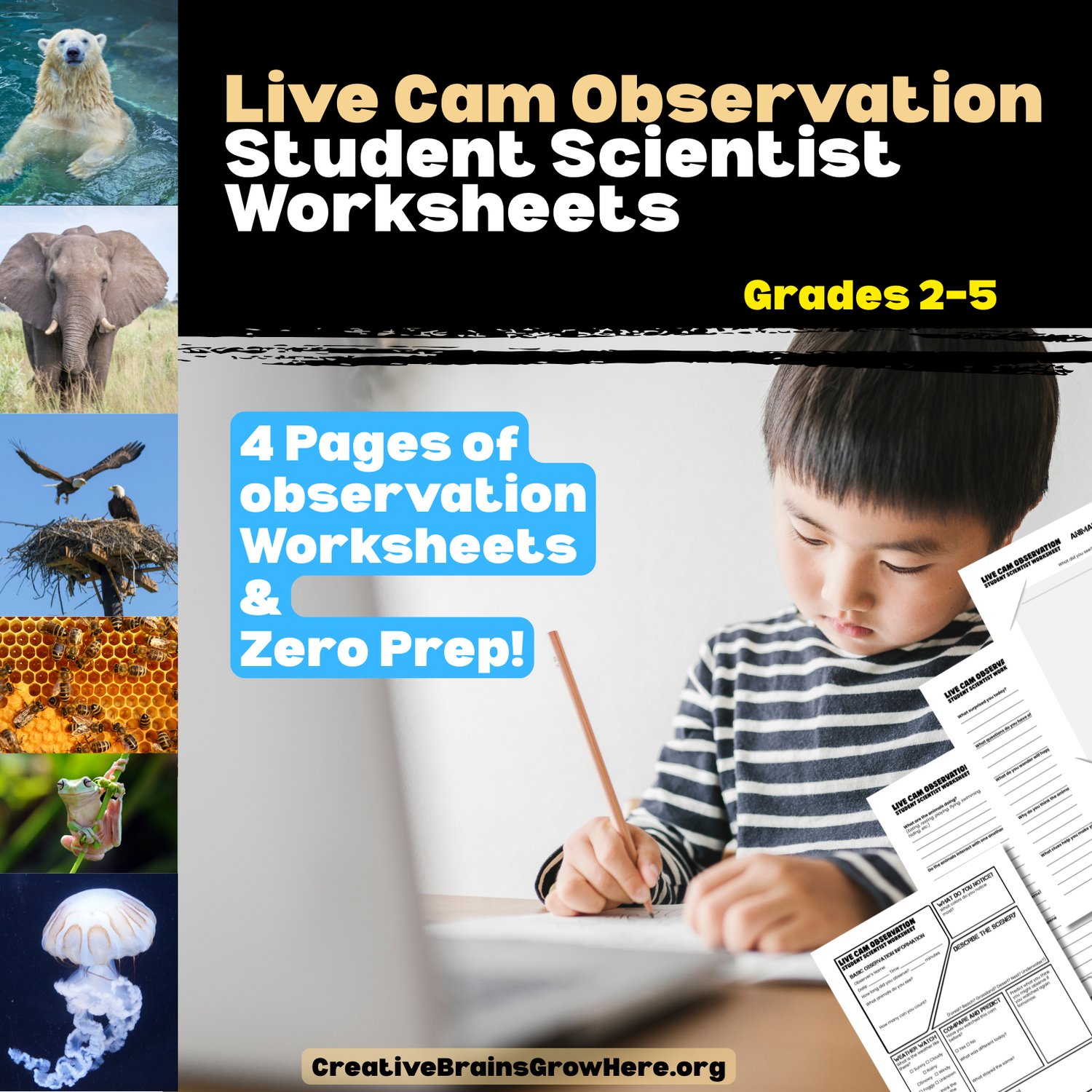
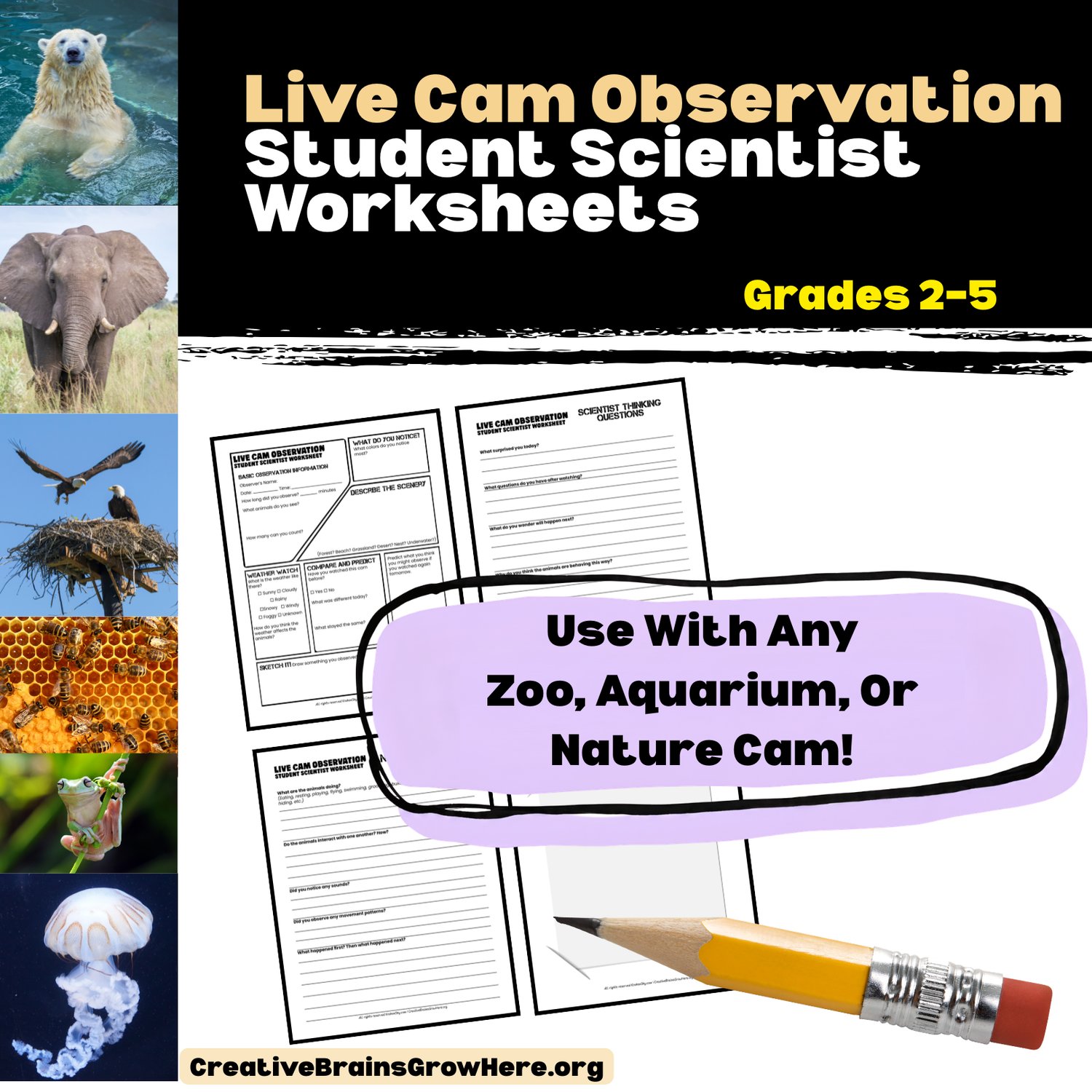
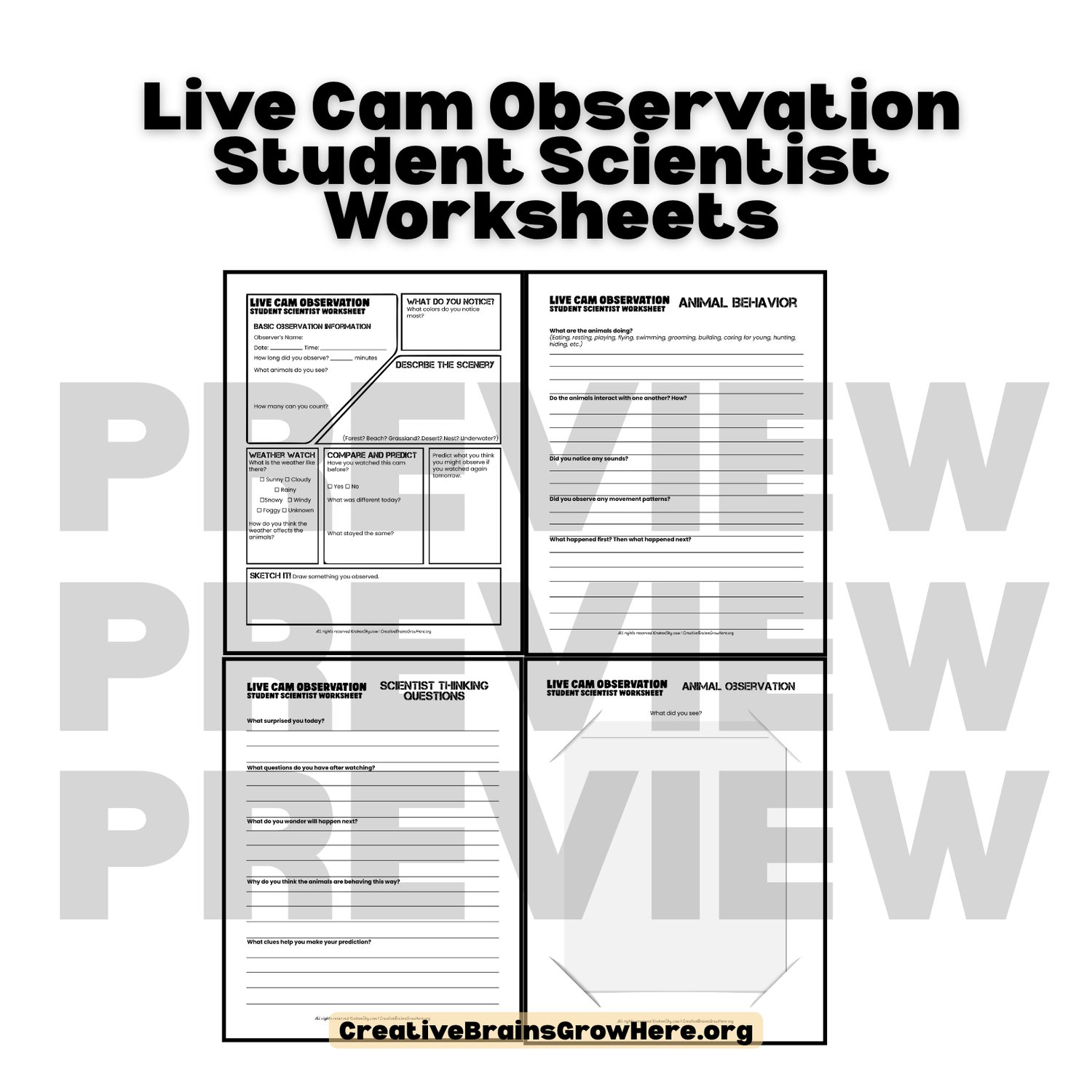
⭐ Live Cam Observation Student Scientist Worksheet
⭐ Animal Behavior Observation Page
⭐ Scientist Thinking Questions Page
⭐ Full-Page Animal Observation Recording Sheet
⭐ Opportunities for drawing, writing, comparing observations, and making predictions
Students Will:
✔ Record the date, time, and length of their observations
✔ Identify and count animals they observe
✔ Describe habitats and scenery
✔ Analyze weather conditions and how they may affect animal behavior
✔ Notice colors, patterns, and environmental details
✔ Observe and describe animal behaviors
✔ Identify sounds and movement patterns
✔ Compare observations over multiple days
✔ Make predictions using evidence
✔ Ask scientific questions and wonderings
✔ Sequence events and recognize patterns
✔ Practice scientific sketching and nature journaling skills
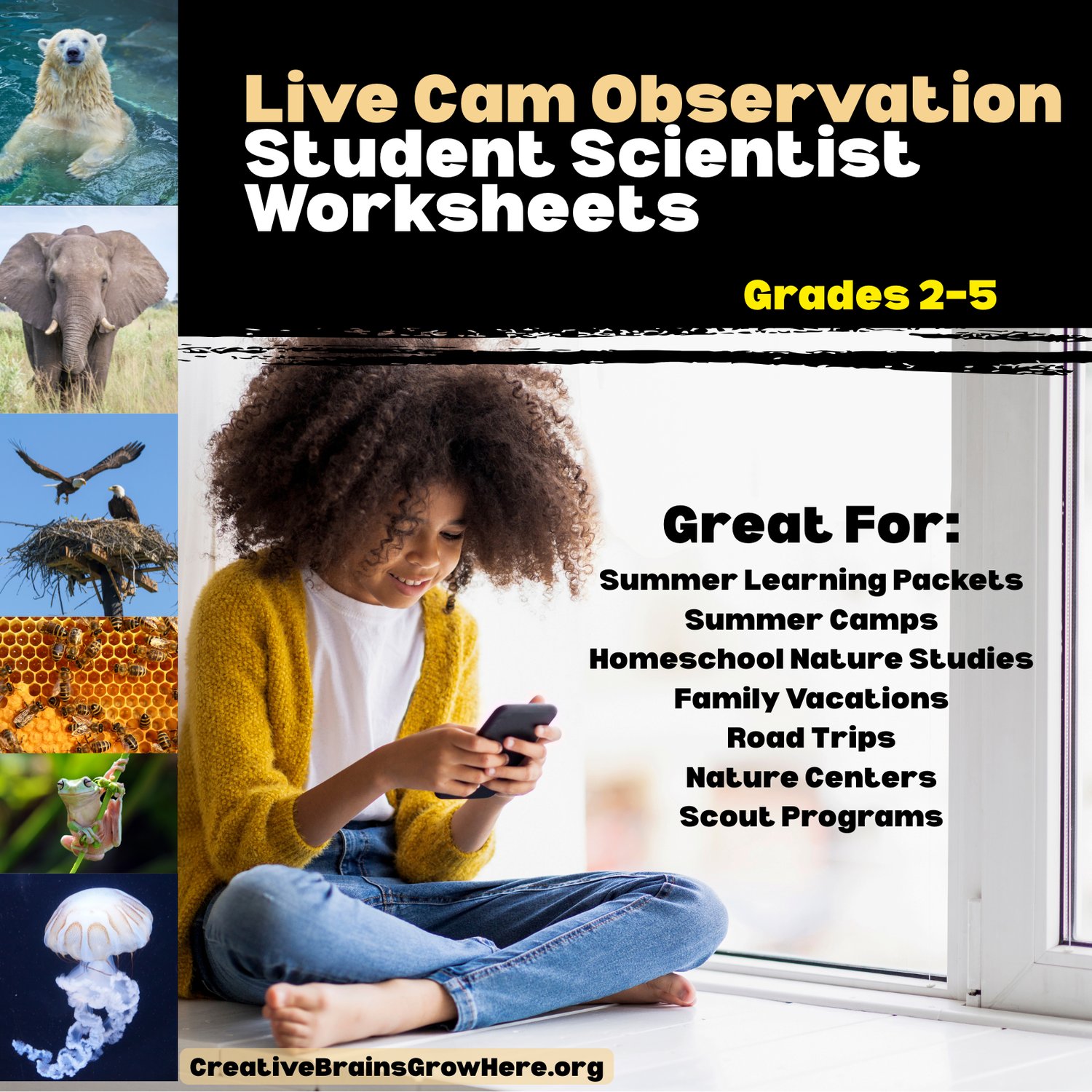
Perfect For:
• Science Centers
• Animal Adaptations Units
• Habitats and Ecosystems Lessons
• Nature Journaling Activities
• Inquiry-Based Learning
• STEM Enrichment
• Virtual Field Trips
• Fast Finisher Activities
• Homeschool Science
• Summer Camps
• Zoo and Aquarium Extensions
• Distance Learning
• Sub Plans
Great to Use With:
• Explore.org animal webcams
• Zoo live cams
• Aquarium live feeds
• National park wildlife cameras
• Nest cameras
• Farm animal webcams
• Nature documentaries and video clips
Skills Students Practice:
- Observation and data collection
- Critical thinking
- Scientific inquiry
- Prediction and reasoning
- Comparing and contrasting
- Evidence-based conclusions
- Descriptive writing
- Visual literacy
- Nature journaling
- Communication skills
Structured observation activities help students build curiosity, patience, and scientific thinking while developing a deeper appreciation for wildlife and conservation. Watching animals through live cams allows learners to recognize patterns, generate questions, and connect classroom science to the real world.
I’d Love to Hear From You!
If you use this activity, I’d love to know how it goes in your classroom or at home! Feel free to tag me on social media @creativebrainsgrowhere — I love seeing how learners explore science through hands-on creativity!
As an educator, author, and illustrator, your reviews and feedback help me continue creating meaningful, kid-friendly resources that support curious minds.
Thank you, and have a fantastic week!
— Julianne (J)
Frequently Asked Questions
How can I use these live animal cam observation worksheets in summer camp?
These summer camp animal observation worksheets are an easy, low-prep activity that combines screen time with hands-on learning. Campers can observe wildlife through live animal webcams, record scientific observations, sketch what they see, compare animal behaviors, and make predictions. They work well as morning activities, rainy-day plans, quiet time, STEM stations, and nature-themed camp programs.
What are the best live animal cams for homeschool science?
Homeschool families love using live animal cams for homeschool science because they provide authentic opportunities to observe real animal behavior. Popular options include eagle nest cams, zoo webcams, aquarium live feeds, African watering hole cams, farm animal cameras, and underwater reef cameras. Students can revisit the same cam over multiple days to build long-term observation skills.
Can these worksheets be used for mixed-age homeschool groups?
Yes! These homeschool nature observation worksheets are designed for flexibility. Younger learners can focus on drawing and simple observations, while older students can analyze behavior patterns, ask deeper inquiry questions, compare data over time, and make evidence-based predictions.
Are these live cam worksheets appropriate for summer learning and preventing summer slide?
Absolutely. These summer learning worksheets encourage critical thinking, descriptive writing, scientific inquiry, and observation skills in a fun and engaging format. They provide meaningful educational activities that help children stay academically active during summer break without feeling like traditional schoolwork.
How do I turn live animal webcams into a homeschool science curriculum?
Simply choose a live animal camera, schedule regular observation sessions, and use the worksheets to document findings. Students can compare observations over days or weeks, study habitats and ecosystems, investigate animal adaptations, and develop questions for further research. This makes an excellent homeschool animal behavior studyor nature journaling unit.
Are these worksheets suitable for homeschool co-ops?
Yes! These homeschool co-op science activities work beautifully in group settings. Students can observe the same camera and compare their findings, discuss different interpretations, collaborate on predictions, and present their scientific observations to peers.
What age group are these summer camp observation printables designed for?
The worksheets are recommended for grades 2–5, but they can easily be adapted for younger campers with adult support or older students who need enrichment. The open-ended format makes them ideal for multi-age summer camp groups and homeschool families.
Can I use these worksheets with nature documentaries instead of live webcams?
Definitely. While they were created as animal webcam observation worksheets, they also work well with nature documentaries, recorded wildlife footage, virtual field trips, classroom videos, and educational streaming programs focused on animals and ecosystems.
What science skills do children practice with live animal observations?
Children develop a variety of important skills, including:
- Observation and data collection
- Scientific inquiry
- Making predictions using evidence
- Comparing and contrasting
- Critical thinking
- Sequencing events
- Descriptive writing
- Nature journaling
- Communication skills
- Understanding animal behavior and ecosystems
Why are live animal cams beneficial for homeschool and camp learning?
Live webcams provide authentic, unpredictable learning experiences that encourage curiosity and patience. Unlike pre-scripted lessons, students never know what they might observe. These homeschool STEM activities and summer camp science activities help children think like scientists by asking questions, gathering evidence, and drawing conclusions from real-world observations.
Are these printables good for screen-free families?
Yes. While students briefly use a device to watch the live cam, the majority of the activity involves writing, sketching, discussing, and analyzing away from the screen. Many families consider these low-screen educational activitiesbecause the technology serves as a window into nature rather than passive entertainment.
What are some creative ways to use these animal observation worksheets during summer?
Families and camp leaders use them for:
- Rainy-day summer camp activities
- Weekly homeschool nature studies
- Virtual zoo field trips
- National park exploration units
- Family nature nights
- Independent science centers
- Travel learning journals
- Animal adaptation lessons
- Camp journaling time
- Wildlife-themed enrichment programs