
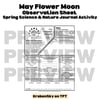
🌕 May Flower Moon Observation Activity | Spring Astronomy & Moon Phases Printable
🌕 May Flower Moon Observation Activity | Spring Astronomy & Moon Phases Printable
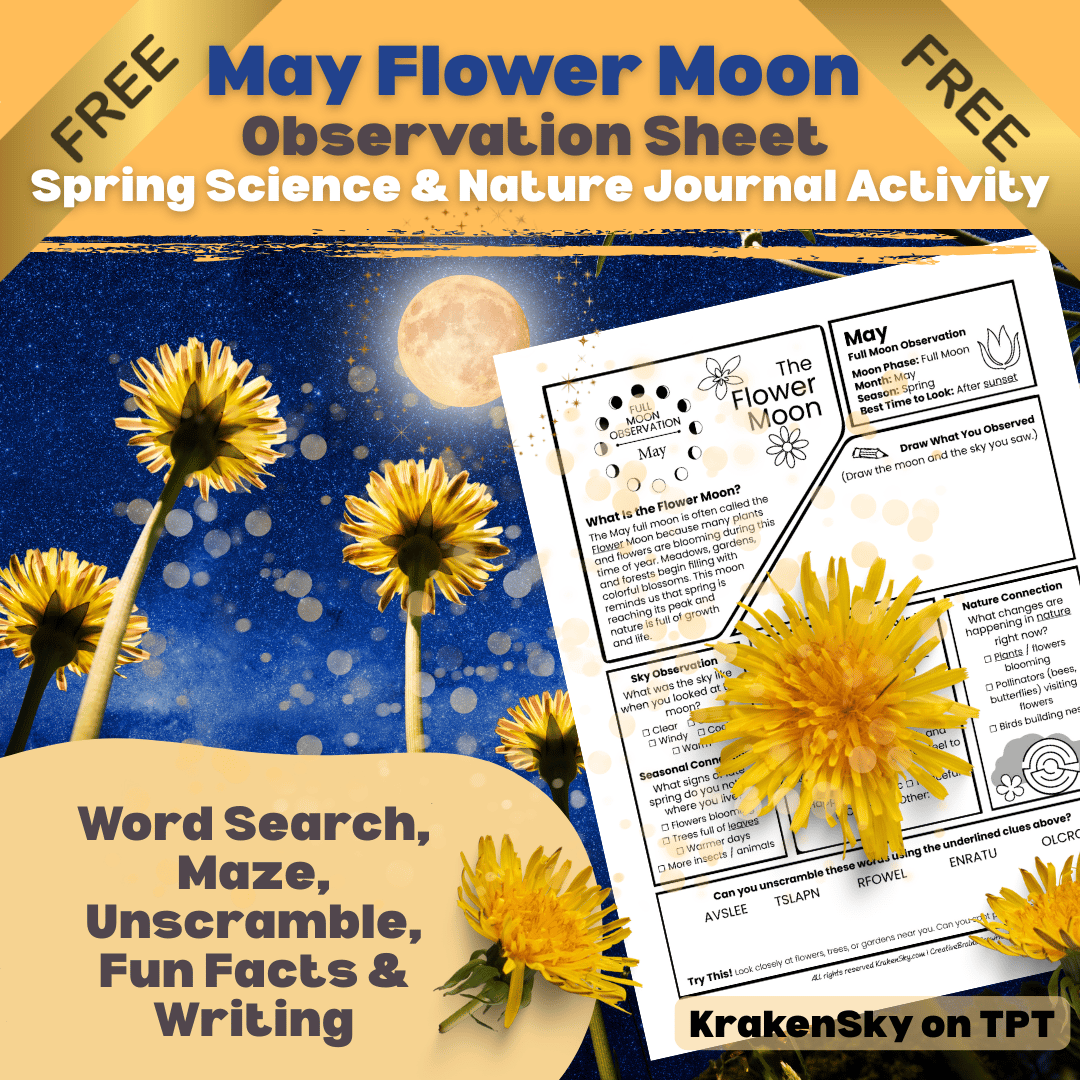
This May Flower Moon observation activity is a fun moon phases worksheet and spring science printable designed for elementary students. Perfect for astronomy lessons, Earth and space science units, nature journaling, and full moon observation activities, this printable helps students explore the May full moon, seasonal changes in nature, and night sky observation in an engaging and simple way.
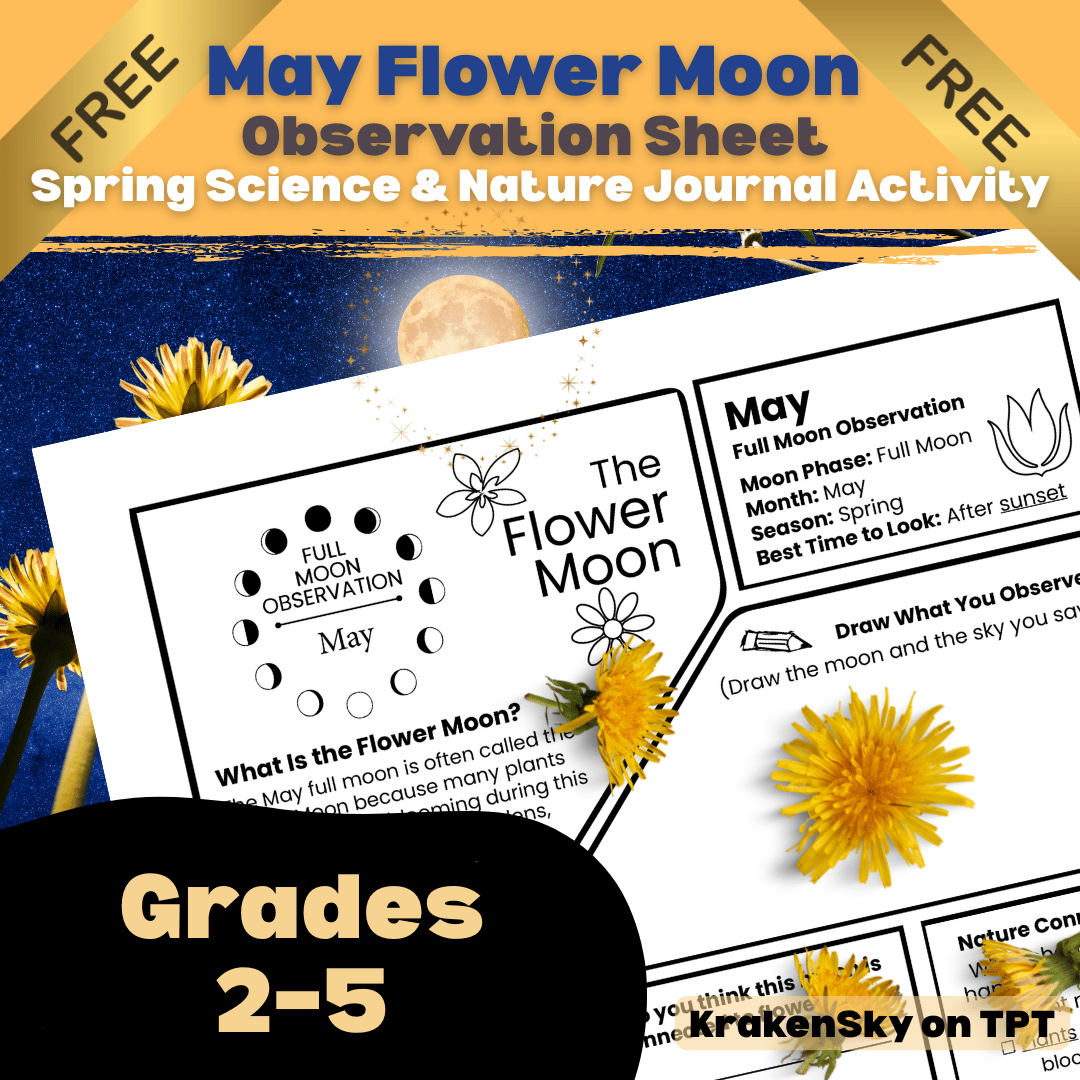
Celebrate the beauty of late spring with this May Flower Moon observation activity for kids! This engaging full moon worksheet introduces students to the traditional May full moon name — the Flower Moon — while encouraging observation, nature connections, and curiosity about the night sky.
This low-prep spring science printable helps students learn about moon phases, seasonal changes, and nature observation through drawing, reflection, and vocabulary activities. It’s perfect for astronomy lessons, Earth and space science units, nature journaling, or spring science centers.
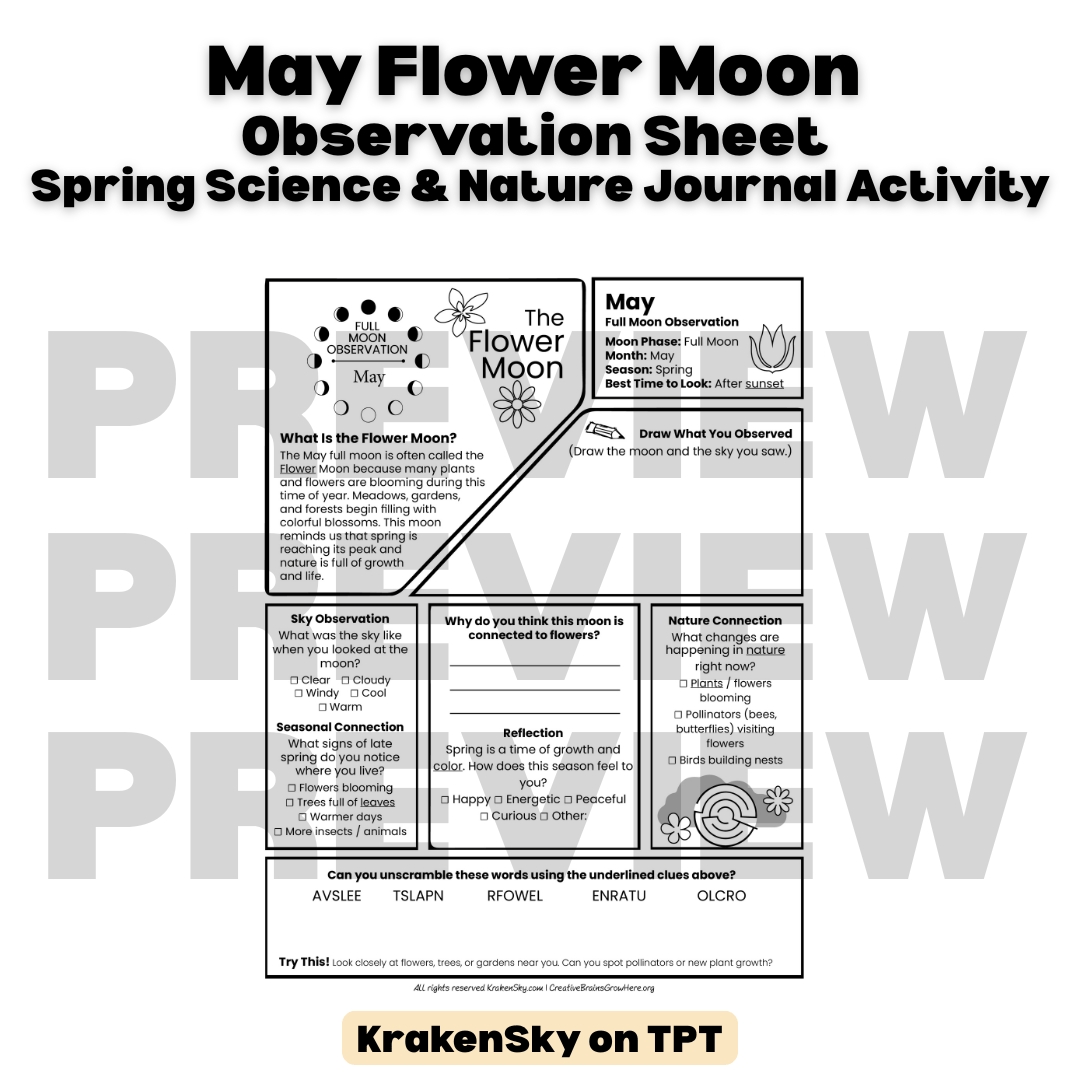
Students will read a short explanation about the Flower Moon, observe the sky, draw the moon they see, and think about the changes happening in nature during late spring.
What’s Included
• 1 May Flower Moon observation worksheet
• Kid-friendly explanation of the Flower Moon
• Moon phases reference graphic
• Draw the moon observation section
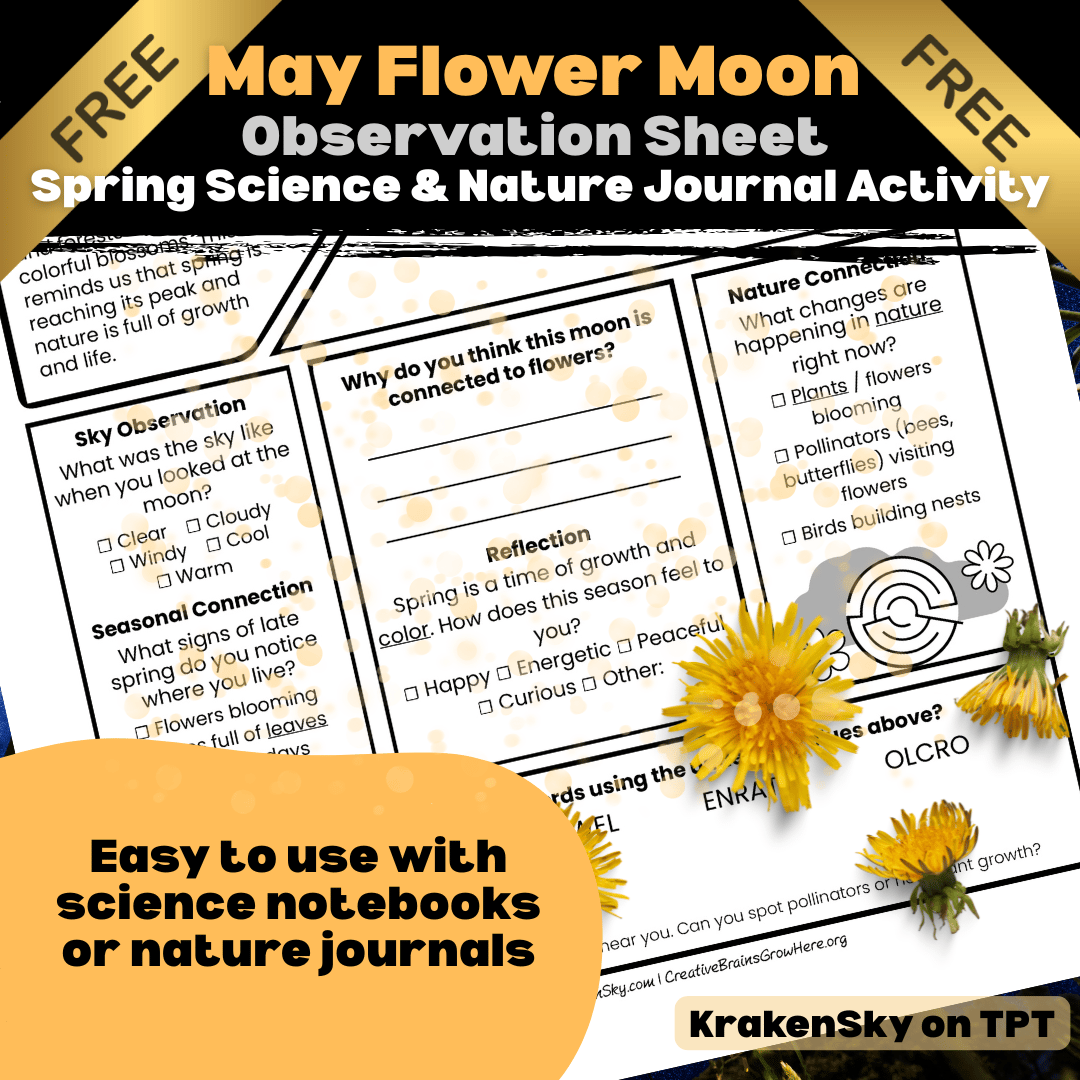
• Sky observation checklist
• Seasonal connection prompts
• Nature observation reflection questions
• Flower Moon vocabulary word scramble
Skills Students Practice
This activity supports:
• Scientific observation
• Seasonal awareness
• Early astronomy concepts
• Vocabulary development
• Critical thinking about nature
• Reflection and descriptive writing
Students also begin noticing patterns between moon phases, seasonal plant growth, pollinators, and wildlife activity.
Perfect For
This Flower Moon printable works well for:
• Moon phases lessons
• Earth and space science units
• Spring science activities
• Nature journaling
• STEM centers
• Early finisher activities
• Outdoor learning lessons
• Homeschool science
It also fits beautifully into seasonal science routines or night sky observation projects.
Grade Levels
Best for Grades 2–5, but easily adaptable for:
• upper elementary science
• homeschool astronomy lessons
• outdoor education programs
Why Teachers Love This Activity
✔ Low prep — just print and use
✔ Combines astronomy, seasonal science, and nature observation
✔ Encourages curiosity about the night sky and moon phases
✔ Helps students connect science concepts with real-world observation
Part of the Full Moon Observation Series
This resource is part of a Full Moon Observation Series that helps students explore seasonal moon names and the rhythms of nature throughout the year.
Each activity encourages students to observe the moon and notice seasonal changes in plants, animals, and weather.
See them all here: Space & Planets
I’d Love to Hear From You!
If you use this activity, I’d love to know how it goes in your classroom or at home! Feel free to tag me on social media @creativebrainsgrowhere — I love seeing how learners explore science through hands-on creativity!
As an educator, author, and illustrator, your reviews and feedback help me continue creating meaningful, kid-friendly resources that support curious minds.
Thank you, and have a fantastic week!
— Julianne (J)
creativebrainsgrowhere.org
@creativebrainsgrowhere
❤️This resource has been donated to educators by CreativeBrainsGrowHere.org
Follow on social media @CreativeBrainsGrowHere ❤️ Donate Here
FAQ: May Flower Moon Observation Activity
What is the Flower Moon?
The Flower Moon is the traditional name for the May full moon. The name comes from the many flowers that bloom during late spring. Gardens, meadows, and forests begin filling with blossoms during this time of year, making it a perfect opportunity to connect moon observation with seasonal nature learning.
Is this Flower Moon worksheet a moon phases activity for students?
Yes. This printable works well as a moon phases activity for elementary students because it introduces the full moon phase and encourages students to observe and draw the moon they see in the sky. It can also be used alongside other moon phases worksheets during an Earth and space science unit.
How can teachers use this full moon observation worksheet in the classroom?
Teachers often use this full moon observation activity as part of:
- astronomy lessons
- moon phases units
- spring science centers
- nature journaling activities
- early finisher science work
Students observe the sky, draw the moon, and connect what they see to seasonal changes in nature.
What grade levels is this moon observation activity best for?
This astronomy worksheet for kids is best suited for grades 2–5, but it can easily be adapted for younger learners or used in homeschool science lessons.
Does this activity work for a spring science lesson?
Yes. This printable is designed as a spring science activity because the May full moon, known as the Flower Moon, is closely connected to seasonal changes such as blooming flowers, pollinators, and warmer weather.
Can this worksheet be used for nature journaling?
Absolutely. The moon observation drawing section and reflection prompts make this activity a great addition to nature journaling lessons or outdoor science activities. Students can observe the sky and record what they notice about nature during late spring.
Do students need to see the full moon to complete the activity?
No. While observing the full moon is encouraged, students can still complete the worksheet by learning about the Flower Moon and discussing seasonal changes in plants, animals, and weather.
Is this a good astronomy activity for elementary science units?
Yes. This printable works well as an introductory astronomy activity for elementary students, helping them connect the full moon phase, seasonal science, and nature observation in a simple and engaging way.