

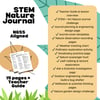

STEM Nature Journal Project | Outdoor Science & Pollinator Activities | Grades 2–5
STEM Nature Journal Project | Outdoor Science & Pollinator Activities | Grades 2–5
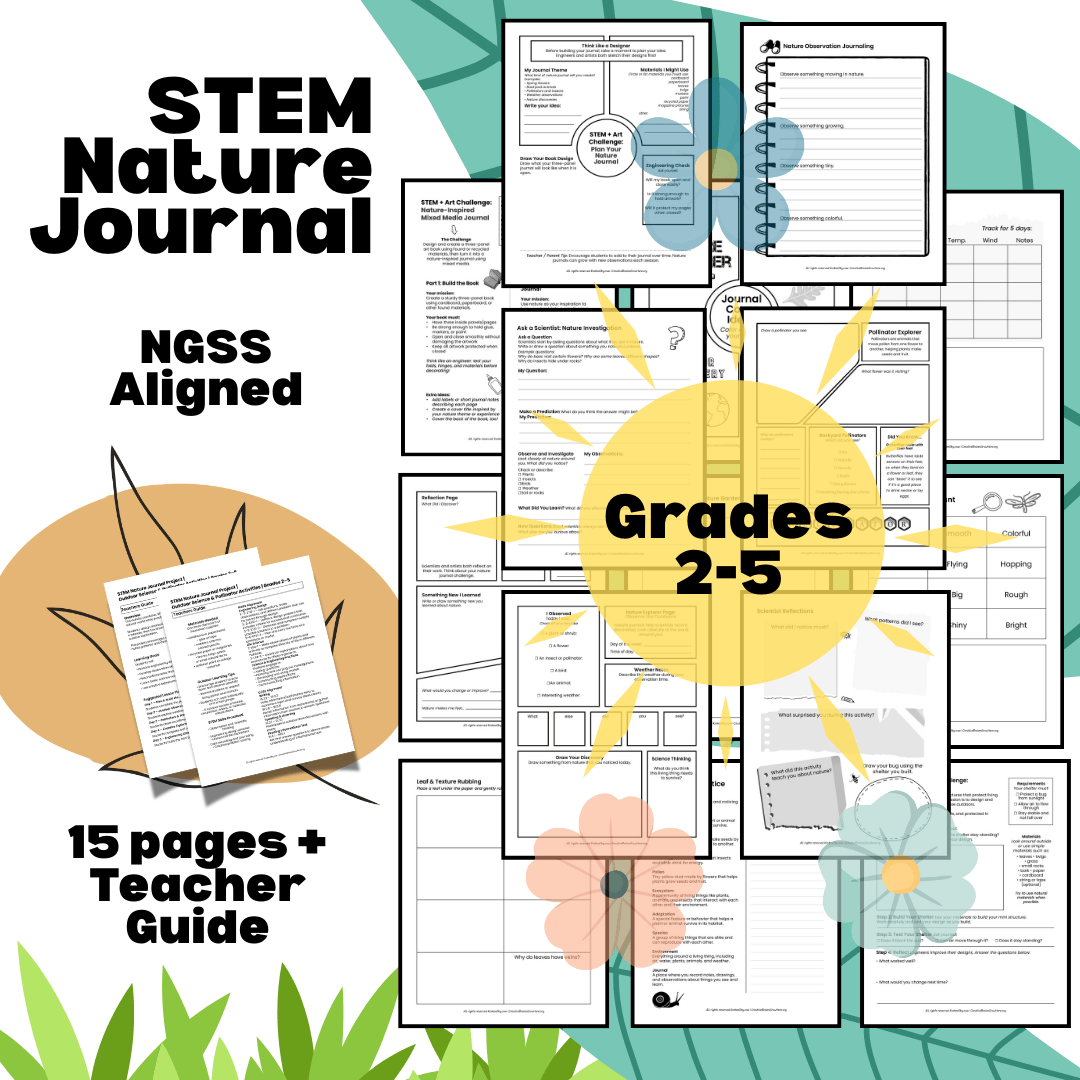
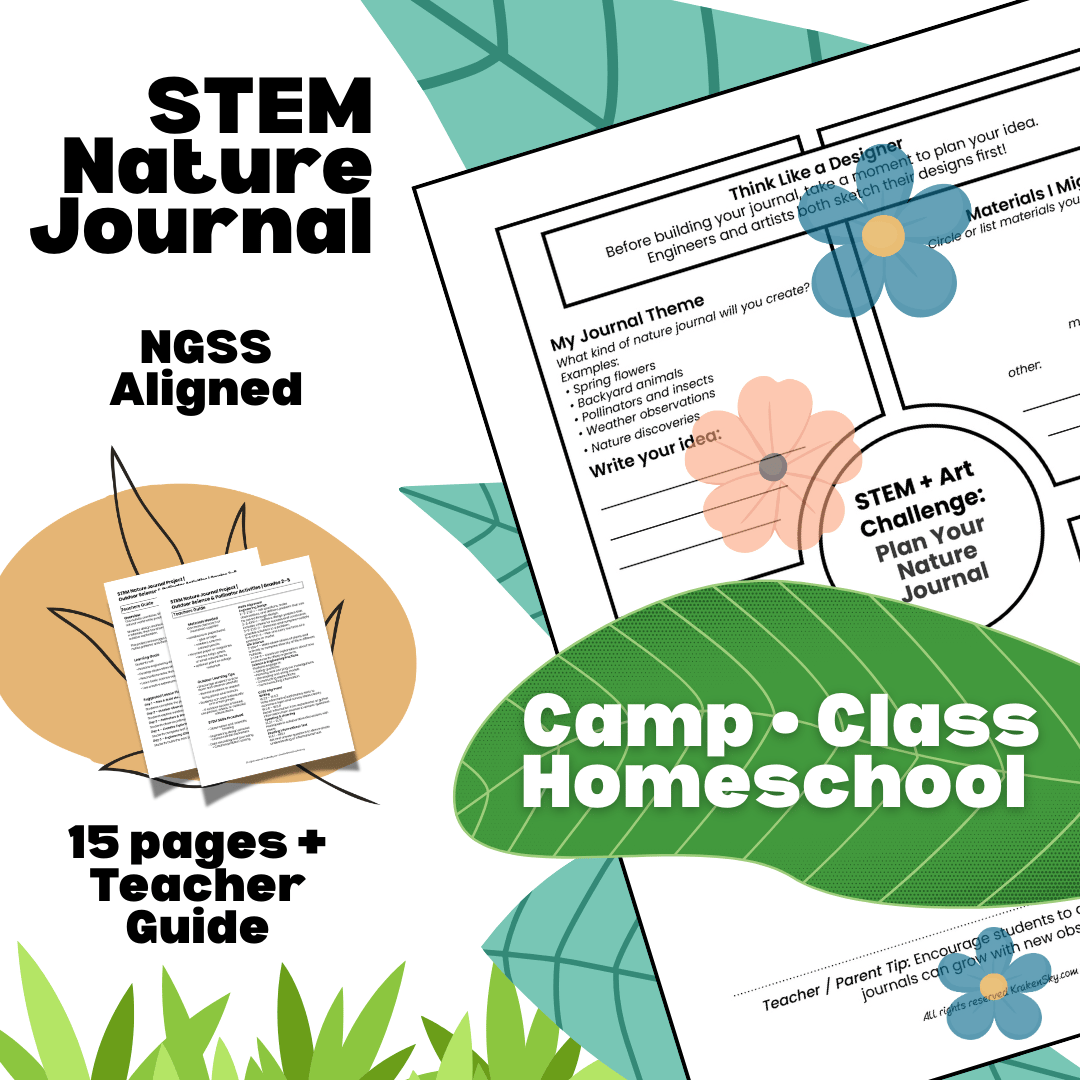
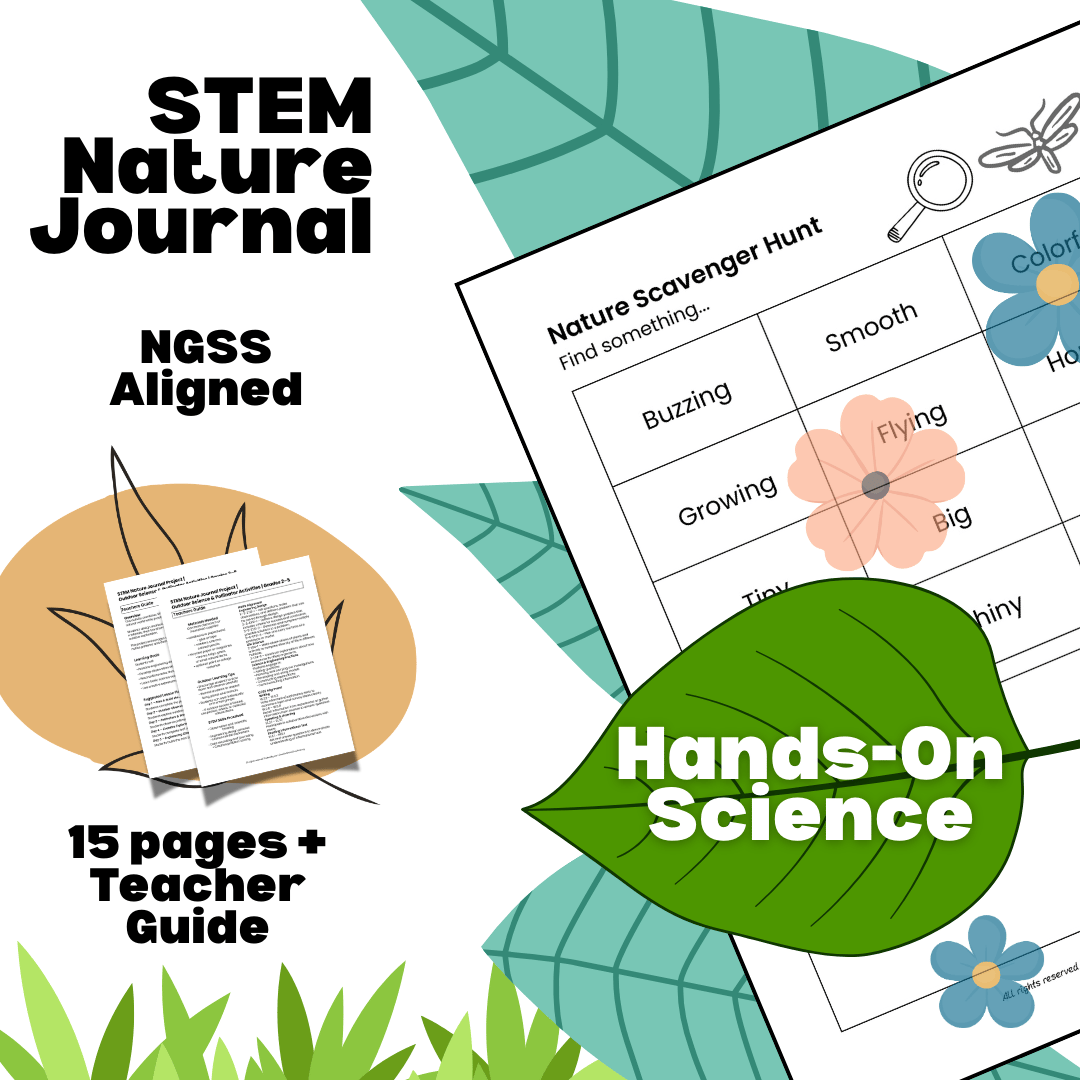
Bring science learning outdoors with this hands-on STEM nature journal project! Students design and build their own three-panel nature observation journal, explore their environment, investigate pollinators, track weather, and think like real scientists through questioning and reflection.
Get the first page FREE here: STEM + Art Challenge: Nature-Inspired Mixed Media Journal
This cross-curricular STEM + Art activity combines nature study, engineering design, journaling, and creativity, making it perfect for nature units, spring science lessons, outdoor learning days, STEM centers, homeschool projects, or nature camp activities.
Students observe plants, insects, and weather patterns while recording discoveries through drawing, writing, investigation, and reflection.
Perfect For
• Nature units
• Outdoor learning days
• STEM challenges
• Earth Day activities
• Science centers
• Nature camp or summer camp
• Homeschool science
• End-of-year projects
• Project-based learning
What Students Will Do
Students will:
• Design and build a three-panel nature journal structure
• Observe plants, animals, and weather outdoors
• Record discoveries through drawing, writing, and labeling
• Investigate pollinators and ecosystems
• Track weather patterns over several days
• Ask scientific questions and make predictions
• Build a mini bug shelter engineering challenge
• Reflect on discoveries like real scientists
What's Included
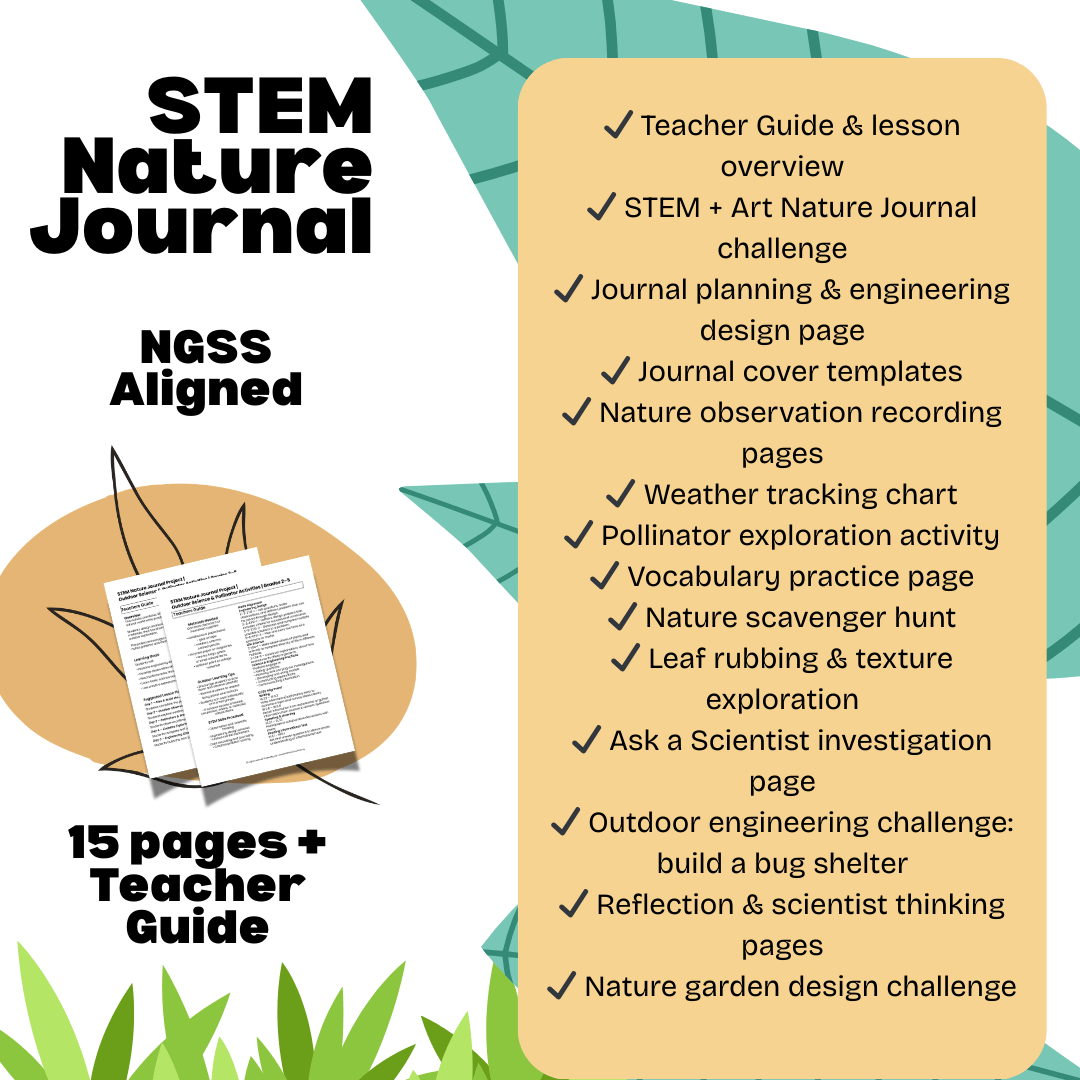
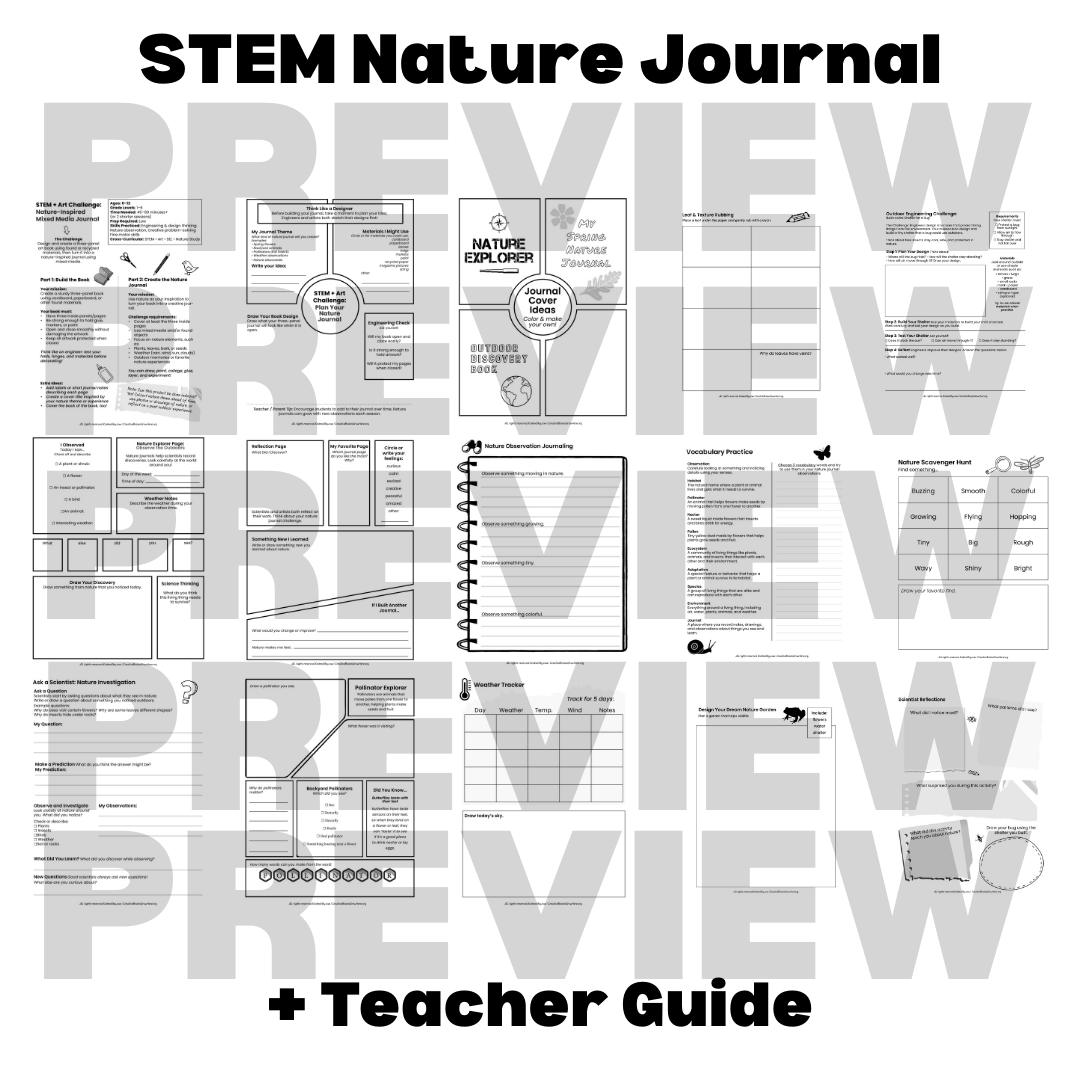
This printable resource includes 17 pages:
✔ Teacher Guide & lesson overview
✔ STEM + Art Nature Journal challenge
✔ Journal planning & engineering design page
✔ Journal cover templates
✔ Nature observation recording pages
✔ Weather tracking chart
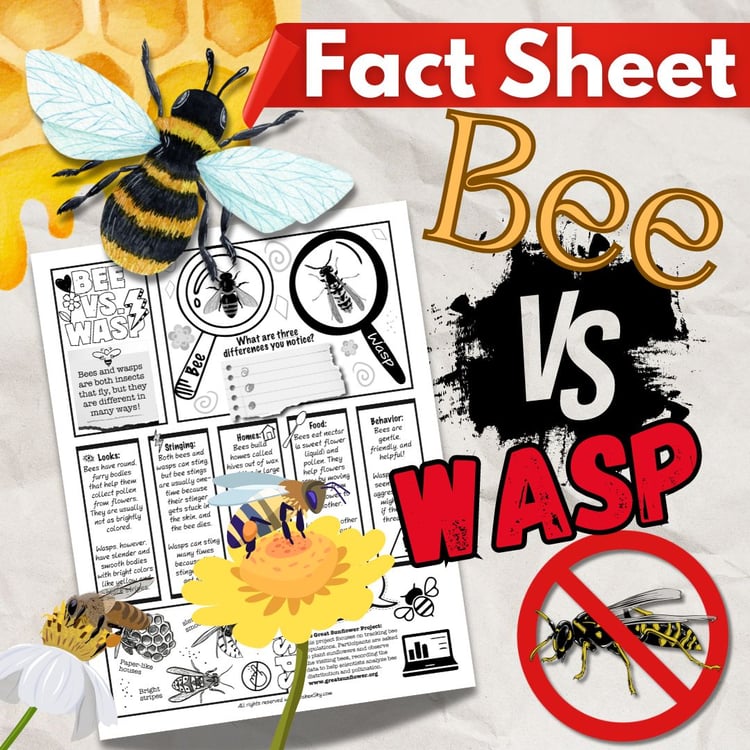
✔ Pollinator exploration activity
✔ Vocabulary practice page
✔ Nature scavenger hunt
✔ Leaf rubbing & texture exploration
✔ Ask a Scientist investigation page
✔ Outdoor engineering challenge: build a bug shelter
✔ Reflection & scientist thinking pages
✔ Nature garden design challenge
Skills Students Practice
• Scientific observation
• Engineering design thinking
• Nature journaling
• Scientific questioning
• Creative problem solving
• Environmental awareness
• Reflection and explanation
• Fine motor skills and artistic expression
Great For Nature Camp & Outdoor Learning
This resource is ideal for:
• Nature camp activities
• Outdoor STEM lessons
• Forest school programs
• Backyard science exploration
• Environmental education lessons
Students slow down, observe nature closely, and think like scientists while creating a meaningful keepsake journal
Standards Alignment
NGSS: Supports K–5 Engineering Design and Life Science standards including asking questions, planning investigations, constructing explanations, and observing relationships between organisms and their environment.
CCSS: Aligns with grades 2–5 Writing, Reading Informational Text, and Speaking & Listening standards through observation journaling, scientific questioning, and collaborative discussion.
Teacher Tip
Nature journals grow over time! Students can continue adding pages throughout the year as they observe seasonal changes.
I’d Love to Hear From You!
If you use this activity, I’d love to know how it goes in your classroom or at home! Feel free to tag me on social media @creativebrainsgrowhere — I love seeing how learners explore science through hands-on creativity!
As an educator, author, and illustrator, your reviews and feedback help me continue creating meaningful, kid-friendly resources that support curious minds.
Thank you, and have a fantastic week!
— Julianne (J)
FAQ For Teachers:
What is a nature journal activity for students?
A nature journal activity helps students observe plants, animals, insects, and weather while recording their discoveries through drawings and written notes. Nature journaling encourages scientific observation, curiosity, and creativity while helping students connect with the natural world.
What grade levels is a nature journal STEM activity best for?
Nature journal STEM activities work well for grades 2–5, but they can easily be adapted for younger or older students. Younger students may focus more on drawing and observation, while older students can add written reflections, vocabulary, and scientific explanations.
How does a nature journal support STEM learning?
Nature journals support STEM learning by helping students practice scientific observation, asking questions, recording data, and thinking like scientists. Students investigate nature, notice patterns, and reflect on their discoveries, which strengthens inquiry-based science skills.
Can this nature journal project be used for outdoor learning?
Yes! This activity is designed for outdoor learning and nature exploration. Students can observe plants, insects, pollinators, and weather patterns while recording their discoveries in their journals. It also works well for nature walks, school gardens, and outdoor science lessons.
Is this nature journal activity aligned with NGSS science standards?
Yes. The activities support Next Generation Science Standards (NGSS)related to scientific observation, asking questions, engineering design, and understanding relationships between organisms and their environments.
What materials do students need for a nature journal STEM project?
Most nature journal activities use simple classroom or household materials such as paper, cardboard, markers, glue, and recycled materials. Students may also collect natural items like leaves, twigs, or flowers to use in their journal pages.
Can this activity be used for homeschool science?
Yes. Nature journaling is very popular in homeschool science programs because it encourages hands-on learning, outdoor exploration, and student-led discovery. It works well as part of nature study, environmental science, or outdoor STEM learning.
What science topics can students explore in a nature journal?
Students may explore topics such as:
• pollinators
• plant growth
• insects and habitats
• weather patterns
• ecosystems
• seasonal changes in nature
How long does a nature journal STEM project take?
This project can be completed in 45–60 minutes, but many teachers extend it over several days or weeks as students continue adding new nature observations and discoveries.
Why are nature journals important for science learning?
Nature journals help students slow down, observe the world carefully, and develop curiosity about the environment. Recording observations through drawing and writing strengthens both science skills and creative thinking.
FAQ For Parents:
Looking for a ready-to-use nature journal activity? This STEM Nature Journal Project helps kids observe pollinators, track weather, and think like scientists while exploring the outdoors.
What is a nature journal for kids?
A nature journal is a place where kids record what they notice outdoors through drawings, notes, and observations. Children may write about plants, insects, weather, animals, or interesting discoveries they see during a nature walk.
What age is best for starting a nature journal?
Children as young as age 6 can start nature journaling. For younger students, the focus is often on drawing and labeling what they see. Older elementary students can add written observations, vocabulary, and scientific explanations.
What should kids include in a nature journal?
Kids can record many different things in a nature journal, including:
• plants and flowers
• insects and pollinators
• birds or animals
• weather patterns
• leaves, seeds, and textures
• outdoor discoveries during nature walks
Drawing pictures and labeling observations helps children notice details in the natural world.
How does nature journaling support science learning?
Nature journaling encourages kids to think like scientists by observing closely, asking questions, recording discoveries, and looking for patterns in nature. These skills support inquiry-based science learning and environmental awareness.
Can nature journals be used for homeschool science?
Yes. Nature journals are widely used in homeschool nature study programs because they combine outdoor learning, art, writing, and science observation. Many homeschool families use nature journals during nature walks, park visits, or backyard exploration.
What supplies are needed for a kids' nature journal?
Nature journals can be created with very simple supplies, such as:
• paper or a small notebook
• pencils, crayons, or markers
• cardboard or recycled materials
• leaves or natural objects for art projects
Many activities can also be done using items found during outdoor exploration.
What are some easy nature journal prompts for kids?
Simple prompts help students get started. Examples include:
• Draw a flower you see outside.
• What insects did you notice today?
• What does the sky look like today?
• What sounds did you hear in nature?
• What surprised you during your nature walk?
Why do teachers use nature journals in the classroom?
Teachers use nature journals because they help students practice observation, scientific thinking, writing, and creativity. Nature journaling also encourages curiosity and helps students build a connection to the environment.
How can a nature journal become a STEM activity?
A nature journal becomes a STEM activity when students ask questions, investigate nature, track patterns, and design solutions such as building shelters for insects or observing pollinators and ecosystems.
What are the benefits of outdoor learning activities for kids?
Outdoor learning activities help children develop curiosity, focus, and appreciation for nature. Studies show that outdoor exploration can improve engagement, creativity, and problem-solving skills while supporting science learning.